Stock Insurance
Stock insurance protects your business inventory against theft, damage, and loss, ensuring financial recovery from unexpected events affecting your valuable stock and business assets.

How this could protect you
Protection against theft, break-ins, and fraudulent loss of inventory
Coverage for earthquakes, floods, and other natural disasters
Accidental damage protection for stock and business contents
Coverage during alterations and temporary removal of items
Same-day certificate of insurance when you need it
Customisable coverage tailored to your specific business needs
Years of experience
Clients protected
5-star reviews
What's covered
Stock insurance, also known as material damage insurance, covers losses involving your business inventory and contents across a wide range of scenarios.
Theft and Break-ins - Protection when someone breaks into your shop or premises, or fraudulently obtains your goods. Your policy covers the full value of stolen items, helping you replace inventory quickly without devastating your cash flow.
Natural Disasters - Comprehensive coverage if your stock is damaged or destroyed by earthquakes, floods, storms, and other natural disasters that can strike without warning. New Zealand's unique geographic risks make this protection essential for business continuity.
Accidental Damage - Protection when employees accidentally break items, machines malfunction and damage stock, or unforeseen accidents occur that aren't related to normal daily business operations. This covers the cost of replacing damaged inventory so you can continue serving your customers.
Additional coverage extends to incidents at business premises, damage during alterations or renovations, temporary removal of items from your usual location, stock held under rental agreements, and accidental loss of business money. Many policies also offer optional add-ons for stock in transit or stored at off-site locations.
Why you need this
Stock represents a significant portion of your business's assets and working capital. If anything were to happen to this inventory, it could cause severe financial hardship, disrupt the regular flow of business operations, and potentially lead to complete business interruption. Having an insurance policy dedicated to covering stock ensures that your business can recover swiftly from unexpected events without bearing the entire financial burden of replacing valuable inventory.
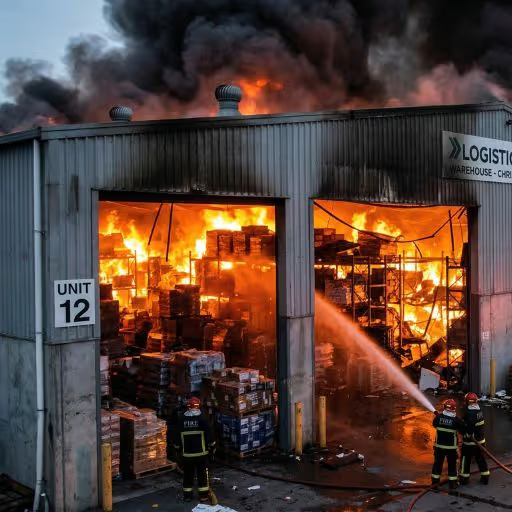
Consider real-world scenarios: a retail store loses $80,000 worth of electronics in a break-in; a warehouse flood destroys $150,000 of perishable goods; a café fire damages $25,000 in food stock and supplies. Without adequate stock insurance, these losses come directly from your business's bottom line, potentially threatening your ability to continue trading.
It's crucial to have stock cover if your business:
- Holds valuable inventory that would be costly to replace
- Operates in theft-prone areas or high-crime locations
- Faces natural disaster risks like earthquakes, floods, or storms
- Relies heavily on physical stock to generate revenue
- Has business premises with significant inventory on-site
- Maintains seasonal stock that fluctuates in value throughout the year
Stock insurance provides peace of mind that your investment in inventory is protected, allowing you to focus on growing your business rather than worrying about potential losses.
How to Get Stock Insurance Coverage
Get same-day proof of insurance when you purchase through Gerrards - no waiting weeks like traditional brokers
Contact Us
Call us on 0800 374 691 or get covered online to start your instant coverage process. Our friendly team is ready to help you protect your business stock.
Provide Business Details
Share essential information including your business name, nature of activities, number of employees, predicted annual income, stock value, and years of industry experience.
Receive Your Policy
Get your customised stock insurance policy with a certificate of insurance the same day. Start protecting your valuable inventory immediately.
Review Annually
Review your policy each year or whenever there's a significant change in your business operations, stock levels, or inventory value to ensure adequate protection.
Pricing factors
Stock insurance in New Zealand typically costs between 0.3 - 1% of the value of your business stock per year, though actual premiums vary based on your specific circumstances.
Stock insurance premiums are calculated based on:
- Limit of cover - The total value of stock you need to insure directly impacts your premium. Higher inventory values result in higher premiums, but ensure adequate protection.
- Type of industry - Different industries carry different risk profiles. High-value electronics retailers may pay more than general merchandise stores due to theft risk and item values.
- Region of New Zealand - Your business location affects pricing. Areas with higher crime rates or greater natural disaster exposure typically have higher premiums.
- Claims history - A clean claims record can result in lower premiums, while previous claims may increase your costs. Maintaining good risk management practices pays off.
- Security measures - Robust security systems, alarms, CCTV, and secure premises can significantly reduce your premiums by lowering risk.
- Excess amount - Choosing a higher excess reduces your premium but increases your out-of-pocket costs if you need to make a claim.
Ways to reduce premiums:
- Implement robust security measures including alarms and surveillance systems
- Maintain a claims-free record through effective risk management
- Opt for higher deductibles if your business can absorb smaller losses
- Regularly review and adjust your sum insured to avoid over-insurance
- Bundle stock insurance with other business policies for potential discounts
Local brokers, New Zealand-wide
From our Christchurch head office to our teams in Auckland East, Bay of Plenty and Manawatu, Gerrards brokers arrange cover for businesses across New Zealand. Find the team closest to you.
Related FAQs
The answers that matter when you're deciding on coverage.
Yes, many stock insurance policies offer coverage for temporary removal of items from your usual location, stock in transit, and stock stored at off-site locations, often available as optional add-ons to your main policy.
Implementing robust security measures including alarms, CCTV surveillance systems, and secure premises can significantly lower risk. Maintaining effective risk management practices and a claims-free record also contributes to better risk profiles.
Stock insurance is crucial for businesses that hold valuable inventory that would be costly to replace, operate in theft-prone or high-crime locations, face natural disaster risks, rely heavily on physical stock to generate revenue, or maintain seasonal stock that fluctuates in value throughout the year.
Stock insurance covers theft and break-ins, natural disasters such as earthquakes, floods and storms, and accidental damage from employee mishaps or machine malfunctions. Additional coverage extends to incidents at business premises, damage during renovations, temporary removal of items, stock held under rental agreements, and accidental loss of business money.
Stock represents a significant portion of your business's assets and working capital, and losing it could cause severe financial hardship and business interruption. New Zealand's unique geographic risks, including earthquakes, floods and storms, make natural disaster protection essential for business continuity.
What our clients are saying
Businesses and families trust us with what matters
What Is Stock Insurance?
Stock insurance is a specialist form of business insurance designed to protect your company's physical inventory and trading stock against loss, damage, or destruction. Whether you're a retailer, wholesaler, manufacturer, or hospitality operator, your stock represents a significant financial investment — and one that is exposed to a wide range of risks every single day.
In New Zealand, stock insurance is most commonly provided as part of a broader material damage or commercial property policy, though it can also be arranged as a standalone product. It covers the cost of replacing or repairing inventory that has been stolen, damaged by fire or weather events, or destroyed as a result of accidents or other covered perils.
Gerrards Insurance Brokers works with over 20 New Zealand and international insurers to find stock insurance solutions tailored to your business's unique needs — whether you hold $10,000 of retail goods or millions of dollars of industrial equipment and materials.
What Does Stock Insurance Cover?
Stock insurance policies in New Zealand generally operate on either a named perils or broad-form (accidental damage) basis. A named perils policy covers only the specific risks listed in your policy document, while a broad-form policy covers all causes of loss except those explicitly excluded. Gerrards will help you identify which approach is right for your business.
Common inclusions across most stock insurance policies include:
- Theft and burglary — Loss of stock following a break-in, forced entry, or fraudulent removal of goods from your premises.
- Fire and explosion — Damage or destruction of inventory caused by fire, explosion, or smoke damage.
- Weather events — Loss caused by storms, flooding, wind, and hail, particularly relevant in New Zealand's variable climate.
- Earthquake and natural disaster — Given New Zealand's seismic activity, earthquake cover is an important component of any stock policy.
- Accidental damage — Unintentional damage caused by employees, equipment failure, or other unforeseen incidents on your premises.
- Water damage — Damage caused by burst pipes, leaking roofs, or other water ingress events.
- Malicious damage — Deliberate destruction or vandalism of your stock by third parties.
What Is Typically Excluded?
Like all insurance products, stock policies contain exclusions that are important to understand before you purchase cover. Common exclusions include:
- Unexplained loss or shortage — Stock that simply cannot be accounted for through stocktake discrepancies, without evidence of a specific insured event, is typically excluded.
- Gradual deterioration — Wear and tear, spoilage from poor storage, or stock that has degraded over time due to age or mismanagement.
- Consequential loss — Loss of profit or revenue resulting from the loss of stock is not covered under a standard stock policy (this is addressed by business interruption insurance).
- Stock in transit — Unless specifically included or covered under a separate marine or goods in transit policy, stock being transported may not be covered.
- Mechanical or electrical breakdown — If a refrigeration unit fails and spoils perishable stock, this may be excluded unless you have specific spoilage cover.
Gerrards will review your policy wording carefully to identify any gaps in coverage and recommend appropriate add-ons or endorsements to address them.
Stock Insurance for Different Industries
Stock insurance is not a one-size-fits-all product. The type of cover you need, the sum insured, and the specific risks you face depend heavily on the nature of your business and the industry you operate in.
Retail Businesses
Retailers face significant exposure from theft, break-ins, and accidental damage. A clothing boutique, electronics store, or hardware retailer all have very different stock profiles — but all share the risk of losing inventory that directly impacts their ability to trade. Retail stock policies should account for seasonal fluctuations in stock levels, particularly for businesses that carry significantly more inventory during peak periods like Christmas.
Wholesale and Distribution
Wholesalers and distributors often hold large volumes of stock at warehouse facilities, which can be difficult and expensive to replace quickly. Coverage should reflect the full replacement cost of stock held on-site, including goods received from suppliers but not yet invoiced to customers.
Food and Hospitality
Cafés, restaurants, and food producers hold perishable stock that can be destroyed quickly in the event of a power outage, refrigeration failure, or contamination event. Specialist spoilage cover is often available as an add-on for businesses in this sector.
Manufacturing
Manufacturers may need to insure raw materials, work in progress, and finished goods separately, as each category carries different values and risk profiles. A fire that destroys a warehouse full of finished products is a very different loss from one that destroys raw materials — and your policy should reflect this.
Rural and Agricultural Businesses
Farm supplies, fertilisers, seeds, and agricultural chemicals can represent significant stock values on rural properties. Gerrards has deep expertise in rural insurance and can help farm businesses and rural retailers arrange appropriate cover for their specific needs.
How Much Stock Insurance Do You Need?
One of the most common mistakes businesses make with stock insurance is underinsurance — insuring stock for less than its true replacement value. This can occur when businesses use outdated valuations, fail to account for stock held at peak periods, or simply underestimate the cost of replacing inventory at current prices.
When determining your sum insured, consider:
- Full replacement cost — Insure your stock for what it would cost to replace at today's prices, not the price you paid for it or its retail value.
- Peak stock levels — If your stock levels fluctuate seasonally, ensure your sum insured reflects your maximum stock holding at any point during the year.
- Off-site stock — Don't forget stock held at third-party warehouses, consignment locations, or in transit if these are covered under your policy.
- Work in progress — For manufacturers and processors, include the value of partially completed goods in your sum insured.
If you are underinsured at the time of a claim, most policies will apply an averaging clause (also known as co-insurance), which means your insurer will only pay a proportion of your loss — potentially leaving you significantly out of pocket.
Agreed Value vs. Indemnity Value
Stock insurance policies can be structured on either an agreed value or indemnity value basis. Understanding the difference is important:
- Indemnity value — The insurer pays the market value of the stock at the time of loss, taking depreciation into account. This is the most common approach for stock insurance.
- Agreed value — You and the insurer agree on the value of your stock at the time the policy is written, and this is the amount paid in the event of a total loss. This approach removes uncertainty but requires accurate valuation at inception.
Gerrards can help you understand which approach is most appropriate for your business and ensure your policy is structured to pay out what you actually need in the event of a loss.
Managing Your Stock Insurance Risk
While insurance protects you financially after a loss, good risk management practices can reduce the likelihood of a claim occurring in the first place — and can also lower your insurance premiums.
Practical steps you can take include:
- Installing monitored security alarms and CCTV systems at your premises
- Using secure locks, roller doors, and physical barriers to deter break-ins
- Conducting regular stocktakes to maintain accurate inventory records
- Storing high-value items in secure areas with restricted access
- Maintaining fire suppression systems and regularly testing smoke alarms
- Keeping detailed purchase records and invoices to support any future claims
- Reviewing your sum insured regularly to ensure it reflects current stock levels and replacement costs
Making a Stock Insurance Claim
If you need to make a claim on your stock insurance policy, acting quickly and methodically will help ensure a smooth and efficient outcome. The following steps will guide you through the process:
- Secure the scene — If the loss involves theft or vandalism, notify police immediately and obtain a reference number.
- Contact Gerrards — Call us as soon as possible so we can notify your insurer and begin the claims process on your behalf.
- Document the loss — Take photographs of damaged stock, compile a list of affected items with values, and gather any supporting documentation such as invoices or purchase records.
- Mitigate further loss — Take reasonable steps to prevent further damage or loss, such as moving undamaged stock away from hazards.
- Cooperate with the loss assessor — Your insurer may appoint a loss assessor to inspect the damage and verify your claim. Gerrards will work with you throughout this process to ensure your interests are represented.
As your broker, Gerrards acts as your advocate throughout the claims process — not the insurer's. We work to ensure you receive a fair and timely settlement so your business can get back on its feet as quickly as possible.
Why Use Gerrards for Stock Insurance?
Gerrards Insurance Brokers is an independent, New Zealand-based brokerage with access to over 20 insurers. We don't work for any single insurer — we work for you. That means we shop the market on your behalf to find the most appropriate cover at the most competitive price, and we're in your corner when it matters most — at claim time.
Our team has extensive experience arranging stock insurance for businesses across a wide range of industries, from small boutique retailers to large-scale manufacturers and rural operations. We understand the nuances of different policy wordings and know which insurers offer the best coverage for specific business types.
When you work with Gerrards, you get:
- Access to 20+ New Zealand and international insurers
- Same-day certificates of insurance when you need them
- Expert advice on coverage levels and policy structure
- Proactive annual reviews to keep your cover up to date
- Dedicated claims support when you need to make a claim
Protecting your stock means protecting your ability to trade. Talk to Gerrards today to arrange cover that gives you genuine peace of mind.
Secure the exact cover your business needs
Get same-day coverage from trusted NZ insurers