
Perils Covered Commercial Property Insurance
Commercial property insurance protects your business premises, fit-out, equipment, and stock against fire, theft, storm damage, and other defined perils. Understanding what's covered, and what's excluded, is essential for New Zealand business owners.
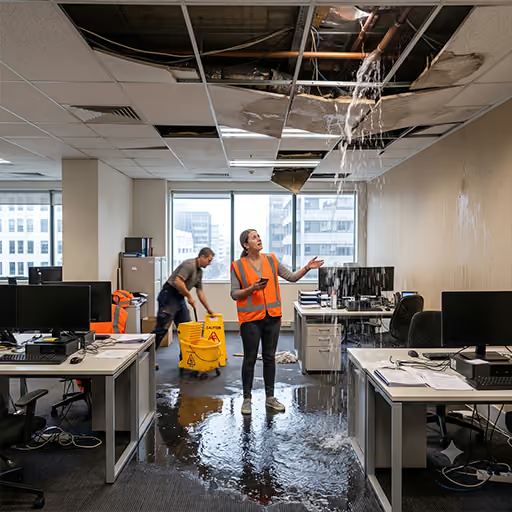
Gerrards works with business owners and property owners across New Zealand to review commercial property insurance, identify coverage gaps, and compare options across 30-plus insurers. Same day quotes available, seven days a week.

How this could protect you
Fire damage protection with full reinstatement cost coverage for building, fit-out, and contents
Wind and storm damage cover, essential for NZ businesses exposed to severe weather events
Theft and burglary protection with coverage for forced entry damage and stolen stock or equipment
Vandalism and malicious damage cover including glass replacement and graffiti removal
Choice between named perils or all-risk policy structures to match your risk profile
Optional add-ons for earthquake and flood cover specific to New Zealand risk exposures
Years of experience
Clients protected
5-star reviews
What's covered
Standard commercial property insurance can protect your physical assets, the building itself, fit-out, equipment, stock, and contents, against a defined set of risks.
Fire is the most commonly understood peril. When a fire damages or destroys your property, you make a claim and the insurer covers the reinstatement costs based on your sum insured. Wind and storm damage also sit inside most standard policies. That matters in New Zealand, where Wellington businesses deal with genuinely brutal weather conditions and where events like Cyclone Gabrielle in February 2023 demonstrated how quickly a weather event can escalate into catastrophic damage.
Theft and burglary are covered under most commercial property policies, though the specifics vary between insurers. The insurer will typically require evidence of forced entry, and there are often sub-limits on cash or high-value items like electronics or jewellery. Vandalism and malicious damage round out what most standard policies include. For retail businesses in particular, this is essential protection. Glass replacement, graffiti removal, deliberate damage to fit-out, these costs add up fast.
There are two fundamental policy structures: named perils (only covers what's explicitly listed) and all-risk (covers everything except what's explicitly excluded). For most commercial property owners with significant assets, all-risk policies offer substantially broader protection and better peace of mind.
Why you need this
Most business owners assume they're covered. They took out a policy, they pay the premium, and they assume that if something goes wrong, the insurer will sort it out. Then a fire breaks out. Or a break-in strips the office. Or a storm tears the roof off the warehouse. And suddenly the policy wording matters, a lot.
Commercial property insurance is one of those covers where the detail is everything. What's included, what's excluded, and how your policy is structured can mean the difference between a full rebuild and a financial crisis that threatens your entire business. Flood is frequently excluded or sub-limited in standard commercial property policies, yet flooding caused enormous commercial losses during the Auckland Anniversary Weekend floods in January 2023. Businesses without proper flood cover faced devastating out-of-pocket costs.
Earthquake is the big one for New Zealand businesses. The Earthquake Commission (EQC) provides some residential cover, but commercial property owners operate in a different framework entirely. Commercial earthquake cover needs to sit within your private policy, and depending on your location, both availability and premium will vary significantly. Canterbury and Wellington businesses face very different pricing and availability than those in Auckland or Northland.
Good risk management starts with an honest assessment of your physical assets, your location, your operations, and what a major loss would actually cost you — not just to repair the building, but to get the business running again. The right commercial property insurance policy protects your most significant business investment.
How to evaluate your commercial property cover
Four steps to ensure your business has the right protection
Assess your physical assets
Conduct an honest assessment of your building, fit-out, equipment, stock, and contents. Ensure your sum insured reflects actual rebuild costs, not just purchase price or book value.
Evaluate location-specific risks
Consider your region's exposure to earthquakes, floods, storms, and other perils. Different New Zealand locations carry vastly different risk profiles and insurance costs.
Calculate true loss costs
Work out what a major loss would actually cost, not just building repairs, but business interruption, temporary premises, and time to get operations running again.
Compare market options with a broker
Work with a broker who has access to the full market to compare policy structures, pricing, and identify coverage gaps before you discover them at claim time.
Pricing factors
Commercial property insurance premiums vary based on several key factors:
Policy structure: Named perils policies are typically cheaper but only cover explicitly listed risks. All-risk policies cost more but provide substantially broader protection by covering everything except specific exclusions.
Location and seismic risk: Canterbury, Wellington, and other seismically active regions carry very different risk profiles. Earthquake cover availability and premium vary significantly by location, with some high-risk areas facing limited insurer appetite.
Flood risk: In high-risk flood areas, cover may be harder to obtain or subject to higher excess conditions, especially after events like the Auckland Anniversary Weekend floods in January 2023 and subsequent weather events.
Business type and operations: A Canterbury manufacturing facility has a different risk profile from an Auckland retail tenancy. A Wellington office block carries different exposures from a Northland tourist lodge. Insurers price accordingly.
Asset value and rebuild costs: Your building sum insured must reflect actual rebuild costs, not market value or purchase price. Underinsurance can leave significant gaps at claim time and trigger average clauses.
Property maintenance and security: Well-maintained properties with compliant sprinkler systems, proper security measures, and regular maintenance records may qualify for better terms and lower premiums.
Local brokers, New Zealand-wide
From our Christchurch head office to our teams in Auckland East, Bay of Plenty and Manawatu, Gerrards brokers arrange cover for businesses across New Zealand. Find the team closest to you.
Related FAQs
The answers that matter when you're deciding on coverage.
What our clients are saying
Businesses and families trust us with what matters
Secure the exact cover your business needs
Compare commercial property insurance options across 30+ insurers