Transporting Machinery Between Sites
Moving heavy plant between sites exposes you to risks most standard policies don't fully cover. Gerrards helps you understand what's at stake and arranges the right transit protection for your machinery.
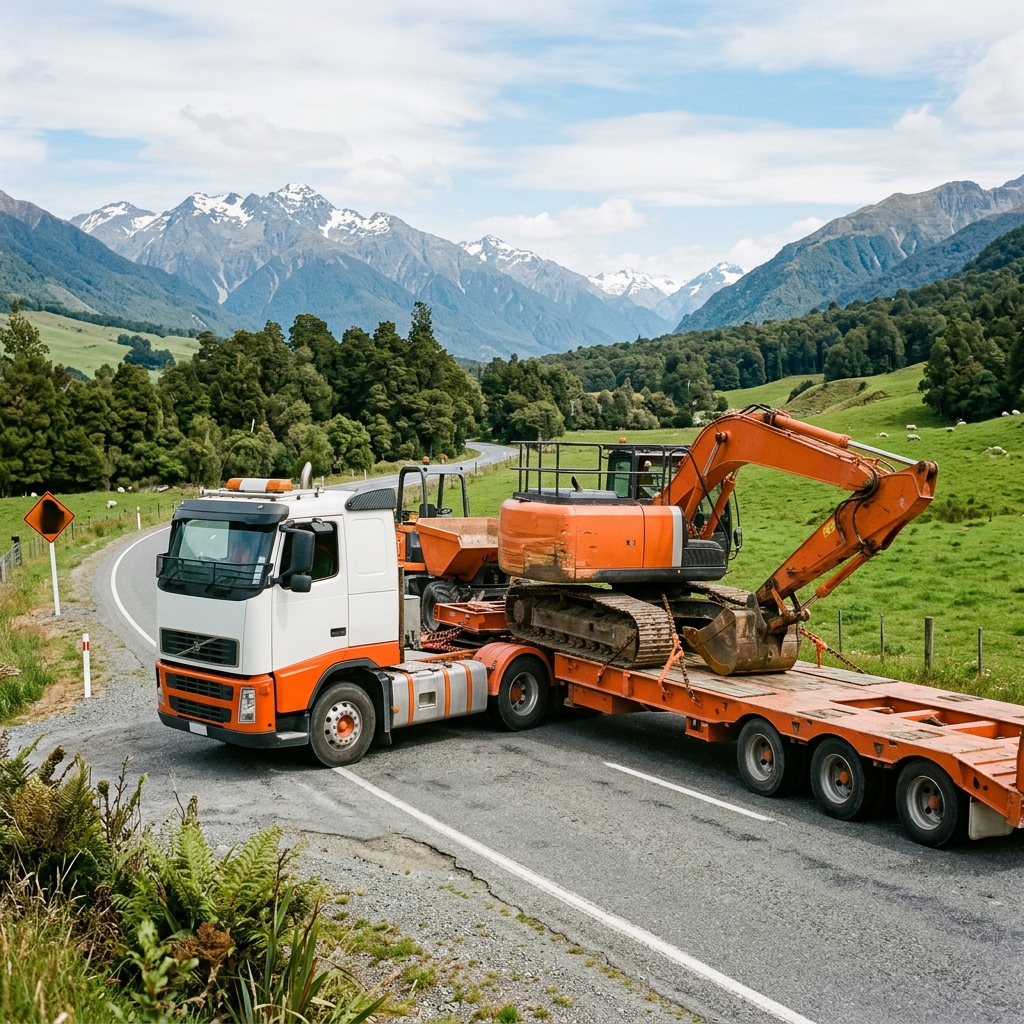
What You Need to Know About Machinery Transit Insurance in NZ
Transporting heavy plant and machinery between sites is one of the riskiest moments in any contractor's operation. A machine that falls off a float, a float that rolls on a corner, or a hazardous fluid spill on a public road, these aren't hypothetical scenarios. They happen, and when they do, the costs can be significant.
Machinery transit insurance in NZ covers your plant while it's being loaded, transported, and unloaded. But the detail matters: salvage and recovery costs, debris removal, hazardous substance incidents, and even general average liability on the Cook Strait ferry crossing are all areas where standard plant policies may leave gaps.
Gerrards works with up to 20 insurers to find the right cover for how you actually operate, not just a generic policy that looks fine until something goes wrong.

How this could protect you
Transit cover checked against how you actually move plant, not just what the policy says on paper
Access to up to 20 insurers so we find the policy that fits your machines and your routes
Salvage and recovery provisions reviewed so you're not caught short on a large machine
Cook Strait general average liability identified and covered if you move plant between islands
Annual policy review to catch gaps before they become expensive claim disputes
A broker who advocates for you at claim time, not for the insurer
Years of experience
Clients protected
5-star reviews
What's covered
What Machinery Transit Insurance Typically Covers
Cover varies between policies and insurers, but a well-structured plant transit policy generally addresses:
- Physical loss or damage to the machine while being loaded, transported, and unloaded
- Salvage and recovery costs when a machine needs to be winched, lifted, or recovered after an incident
- Debris removal and clean-up following a load failure or vehicle rollover
- Hazardous substance incidents where emergency services attend a spill involving your machine or its fluids
- General average liability for Cook Strait ferry crossings under maritime law
- Third-party liability arising from a transit incident on a public road
What's included depends on the specific policy wording and any extensions in place. Some of these items are standard inclusions. Others are optional extensions that need to be specifically arranged. That's why it pays to have a broker review the detail, not just the headline cover.
Why you need this
Why Transit Cover Matters More Than Most Contractors Realise
A machine on a float is exposed in ways it simply isn't when it's working on site. The road environment introduces risks that plant policies aren't always designed to address: load failures, rollovers, hazardous spills, and maritime liability on Cook Strait crossings.
The financial consequences of a serious transit incident can be significant. Recovery and re-siting costs on a large machine are not trivial. Hazardous substance clean-up on a public road can involve multiple agencies and substantial costs. And general average on a ferry crossing can create a liability you didn't know existed.
Most contractors assume their existing plant policy covers transit. Sometimes it does. But the conditions, limits, and exclusions vary enough that assumptions can be expensive. A broker review takes the guesswork out of it, and checks that the cover you think you have is the cover you actually have.
How Gerrards Arranges Your Machinery Transit Cover
Four straightforward steps from first conversation to policy in place.
Tell Us How You Operate
We start by understanding your machines, your routes, how often you move plant, and whether you cross Cook Strait. The detail matters.
We Review Your Current Cover
We check your existing plant policy against your actual transit exposure, identifying gaps in salvage, recovery, hazardous substance, and general average provisions.
We Compare the Market
With access to up to 20 insurers, we find the policy that genuinely fits your situation, not just the closest available option.
Policy in Place
We aim to respond the same day. Once you're happy, we get the cover in place and make sure you understand what you've got.
Pricing factors
What Affects the Premium for Machinery Transit Insurance
Several factors influence what you'll pay for transit cover on your plant:
- Type and value of machinery: heavier, higher-value machines carry more risk and typically attract higher premiums
- Frequency of transit: how often machines are moved, and over what distances, affects the overall exposure
- Routes used: urban routes, remote roads, and Cook Strait crossings each carry different risk profiles
- Transport method: whether machines are moved on purpose-built floats, general trailers, or under their own power on public roads
- Claims history: previous transit incidents or plant claims will be factored into the premium
- Cover structure: the scope of extensions included (salvage, recovery, hazardous substance, general average) affects the overall premium
Every business is different. The best way to understand what you'll pay is to get a quote based on your specific operation.
Local brokers, New Zealand-wide
From our Christchurch head office to our teams in Auckland East, Bay of Plenty and Manawatu, Gerrards brokers arrange cover for businesses across New Zealand. Find the team closest to you.
Related FAQs
The answers that matter when you're deciding on coverage.
Not automatically. Some plant policies extend naturally to cover transit including loading and unloading, but others have conditions or exclusions that limit cover during those specific stages. Loading and unloading are actually high-risk moments, the machine is unsecured, it's being moved in tight spaces, and the consequences of something going wrong can be serious. It's worth checking your policy wording carefully, or asking your broker to confirm exactly when cover applies and when it doesn't.
Some motor vehicle policies include a specific extension covering charges the Fire Service is authorised to impose for attending a hazardous substance emergency involving your vehicle. Whether that applies to your situation depends on your specific policy wording and how the incident is classified. It's not a cost that automatically falls within the standard policy, so check whether your current cover addresses it. Your broker can help you confirm what's included.
It could. Most policies require the vehicle and load to be operated in accordance with all applicable laws and regulations. If you're moving an oversize load without the required permits or pilot vehicles and an incident occurs, your insurer may have grounds to reduce or decline the claim. The urgency of the job doesn't change that exposure. Talk to your broker before the move, not after, to understand exactly where you stand.
General average is a real maritime liability that can catch plant operators off guard. If the vessel encounters an emergency and cargo is sacrificed to save the ship, all cargo owners may be required to contribute to the loss, even if your machine is undamaged. Some motor vehicle and plant policies include an extension covering general average costs for transit between places in New Zealand. If yours doesn't, and your machine crosses Cook Strait regularly, that's a gap worth closing.
Some plant policies extend to cover reasonable salvage, recovery, and re-siting costs when a claim is accepted for the machine itself, but the scope of that cover varies between policies and insurers. The key thing to check is whether your policy includes this as an extension, and whether there's a cap that might leave you short on a larger machine. Recovery costs on heavy plant can be significant, so it's worth confirming before something happens, not after.
What our clients are saying
Businesses and families trust us with what matters
When the Machine Leaves the Site, the Risk Doesn't
Most contractors think about insurance in terms of what happens on the job. The excavator breaks down. The digger damages a buried service. The skid steer tips on uneven ground. All real risks, all worth covering.
But here's what often gets overlooked: the journey between sites.
Loading a 20-tonne excavator onto a float, hauling it down State Highway 1, crossing the Cook Strait, and unloading it at the other end, every one of those steps carries genuine exposure. And not all plant policies treat transit the same way. Some cover it well. Others have gaps that only become obvious when you're standing on the side of the road watching your machine being winched out of a ditch.
This is what machinery transit insurance in NZ is actually about: making sure the cover follows the machine, not just the site.
What Can Go Wrong in Transit
It's easy to underestimate transit risk because moving a machine feels routine. You've done it dozens of times. But the exposure is real.
The Machine Comes Off the Float
It happens. A tie-down fails, a corner is taken too fast, the load shifts on a gravel road. When a machine comes off a float at speed, you're not just looking at damage to the machine itself. You're looking at road damage, potential injury, damage to other vehicles, and the cost of getting the machine recovered and transported to a repairer.
Salvage and recovery costs can be substantial, particularly for larger plant. Some plant policies include an extension that covers reasonable salvage, recovery, and re-siting costs when a claim is accepted, but the scope of that cover varies. Check whether yours does, and whether there's a cap that might leave you short on a large machine.
The Float Rolls
A fully loaded low-loader rolling on a bend is a serious incident. The machine is damaged. The float may be written off. There's debris across the road. And if the machine carries hydraulic fluid, diesel, or other substances, you may have a hazardous spill to deal with on top of everything else.
Some motor vehicle policies include specific cover for hazardous substance emergencies, the kind where Fire and Emergency New Zealand attends and is authorised to charge for their response. That's a real cost that can catch operators off guard. Worth checking whether your policy addresses it, and to what extent.
Debris and Clean-Up
When a load comes off or a vehicle rolls, the road doesn't clean itself. Debris removal and site clean-up costs can add up quickly, especially on a busy road where traffic management is involved. Not every policy treats these costs the same way. Some include them as part of the loss. Others treat them as a separate item with separate limits. Know which you're dealing with before something happens.
Crossing Cook Strait: General Average and Why It Matters
If you're moving plant between the North and South Islands, you're putting your machine on a ferry. And that introduces a concept most contractors have never heard of: general average.
General average is a principle of maritime law. In simple terms, if a vessel encounters an emergency and cargo has to be jettisoned or sacrificed to save the ship and the remaining cargo, all cargo owners share in the loss, proportionally. Even if your machine is sitting safely in the hold and nothing happens to it, you could still be required to contribute to the losses of other cargo owners.
It sounds obscure. It isn't. It's a real liability that arises from the contract of carriage and the governing law of maritime transport.
Some motor vehicle and plant policies include an extension that covers general average costs you're legally required to meet when your machine is in transit between places in New Zealand. If yours doesn't, and your machine crosses Cook Strait regularly, that's a gap worth closing.
Talk to your broker about whether this applies to your situation.
Oversize Loads and Pilot Vehicle Requirements
Moving large plant on public roads in New Zealand requires compliance with oversize load rules. Depending on the dimensions and weight of the load, you may need permits, pilot vehicles, and specific route approvals. These aren't optional, they're legal requirements.
From an insurance perspective, non-compliance matters. If you're moving an oversize load without the required permits or pilot vehicles and something goes wrong, your insurer may have grounds to decline or reduce your claim if the breach contributed to the loss. Policies typically require that the vehicle and load are operated in accordance with all applicable laws and regulations.
This isn't about catching people out. It's about making sure the way you operate matches the assumptions your policy is built on. If you're regularly moving large plant on public roads, it's worth having a conversation with your broker about how your policy responds, and whether there are any conditions you need to be aware of.
The Gap Between Plant Insurance and Transit Cover
Here's something worth understanding: a plant insurance policy and a transit policy aren't the same thing, and they don't always overlap cleanly.
A standard contractors' plant policy, the kind that covers your machinery on site, is primarily designed to cover the machine while it's working. Some policies extend naturally to cover transit between sites. Others have conditions or exclusions that limit cover during loading, transport, or unloading.
The question to ask is: what exactly does my policy cover when the machine is on the float?
- Is the machine covered for physical loss or damage during transit?
- Does cover apply during loading and unloading, or only while moving?
- Are salvage and recovery costs included if the machine needs to be winched off the road?
- Is there any cover for debris removal or clean-up costs?
- Does the policy address hazardous substance incidents?
- Is general average covered for Cook Strait crossings?
If you can't answer those questions with confidence, that's a sign the policy needs a closer look.
A Practical Checklist: Before You Move the Machine
Before your next float move, run through these:
- Confirm your plant policy covers transit: not just on-site operation
- Check how loading and unloading are treated: some policies have specific conditions around this
- Review salvage and recovery provisions: know whether these costs are included and whether there's a cap
- Understand your hazardous substance exposure: particularly relevant for machines carrying fuel or hydraulic fluid
- Check general average cover if crossing Cook Strait: this is a real maritime liability
- Ensure your oversize load permits are in order: non-compliance can affect a claim
- Confirm the float operator has appropriate insurance: their liability doesn't automatically protect your machine
- Know your excess: recovery and repair costs on a large machine can be significant
This isn't an exhaustive list. Every business is different, your policy needs will depend on your specific circumstances. But it's a starting point.
How Different Machines Create Different Transit Risks
Not all plant is the same, and transit risk varies accordingly.
An excavator is one of the most commonly transported machines in New Zealand. They're heavy, they're tall, and they need to be properly secured. A machine that's not correctly loaded is a risk to everyone on the road, and a potential claim waiting to happen.
A digger, whether that's a mini excavator or a larger tracked machine, has similar considerations. Smaller machines are sometimes transported on trailers that aren't purpose-built for the task, which can create additional exposure.
A bulldozer is typically one of the heavier loads you'll move. The float requirements are significant, and the consequences of a load failure are serious. Transit cover for dozers needs to account for the full recovery and re-siting cost, which on a large machine can be considerable.
A skid steer loader is often moved more frequently than larger plant, sometimes multiple times a week. That frequency of transit exposure means the question of whether transit is properly covered matters more, not less.
And if your machine travels on public roads under its own power, rather than on a float, that's a different risk profile again. Mobile plant road cover addresses the specific liability and damage exposure that arises when plant is driven on public roads, and it's worth understanding how that interacts with your main plant policy.
What Gerrards Does Differently
When you go directly to an insurer, you get their policy. That's it. There's no one in your corner checking whether the transit provisions are adequate, whether the salvage cover is realistic for the size of your machines, or whether a Cook Strait crossing creates a gap in your cover.
At Gerrards, we work across up to 20 insurers. That means we can compare how different plant policies treat transit, and find the one that actually fits how you operate. We're not pushing a single product, we're finding what works for your situation.
And at claim time, that independence matters. We advocate for you, not the insurer. If there's a dispute about whether a transit incident is covered, you want a broker in your corner who knows the policy wording and knows how to push back.
We also review policies annually. Premiums change. Policy terms change. The way you operate changes. An annual review catches the gaps before they become expensive surprises.
Getting the Right Cover
Machinery transit insurance in NZ isn't a single product with a standard set of terms. It's a combination of policy provisions, extensions, and conditions that vary significantly between insurers and policy types.
The right approach is to start with how you actually operate: how often do you move machines, what routes do you use, do you cross Cook Strait, what size and type of plant are you transporting, and who's doing the transporting?
From there, a broker can identify the gaps in your current cover and find the policies that address them.
This is general information only. For advice tailored to your situation, get in touch with our team.
Secure the exact cover your business needs
Most contractors assume their plant policy covers the float move. Sometimes it does. Sometimes it doesn't. Let's find out before something goes wrong.