Insuring a Personal Car Used for Rental in NZ: What You Need to Know Before You List
Thinking about putting your car into a rental fleet or listing it on a peer-to-peer platform? It sounds straightforward. But the moment someone pays to drive your vehicle, your standard personal motor policy is almost certainly void. This article explains why, and what you need to do before you hand over the keys.
Years of experience
Clients protected
5-star reviews
Your Personal Car Policy Probably Won't Cover This
Most people assume their car insurance travels with the car. It doesn't, not when money changes hands.
The moment you charge someone to drive your vehicle, you've changed its use in the eyes of an insurer. That shift, from private use to hire or reward, is one of the most common and most costly exclusions in personal motor policies. And most car owners don't find out until they're staring at a declined claim.
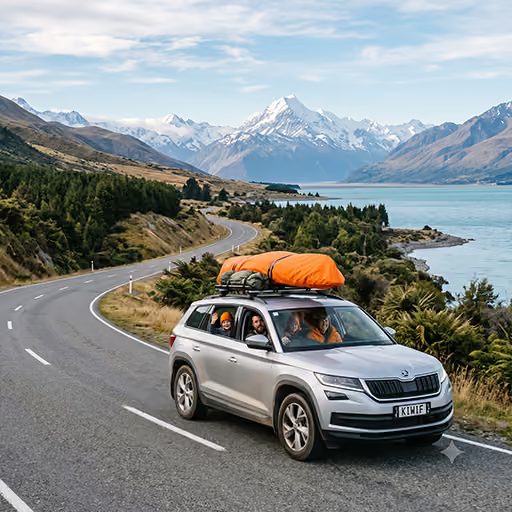
If you're considering listing your vehicle on a peer-to-peer car sharing platform, adding it to a small rental operation, or even just letting someone pay you to borrow it regularly, this is the article you need to read first.
---
What 'Hire or Reward' Actually Means
Insurers use the phrase 'hire or reward' to describe any arrangement where your vehicle is used in exchange for payment, compensation, or some other benefit. It doesn't have to be a formal rental agreement. It doesn't have to be a commercial operation.
If someone pays you, in cash, in kind, or even through a platform that takes a cut, your vehicle is being used for hire or reward.
Standard personal motor policies are priced and underwritten on the assumption that you and maybe a handful of named or listed drivers will use the car for private purposes. Commuting, errands, the occasional road trip. The insurer has assessed the risk on that basis.
The moment a stranger gets behind the wheel and you're being paid for it, the risk profile changes completely. Different driver. Unknown driving history. Potentially different purpose. And the insurer didn't price for any of that.
So they exclude it.
---
Why Non-Disclosure Makes This Worse
Here's where it gets serious.
Some vehicle owners list their car for hire without telling their insurer. Sometimes they genuinely don't realise it matters. Sometimes they assume the platform handles it. Either way, the result is the same: a policy that's been misrepresented, and an insurer with grounds to decline a claim.
And it's not just rental-related claims at risk. If your insurer discovers that the vehicle's use was materially different from what was disclosed, even after an incident that had nothing to do with a rental, they may have grounds to void the policy entirely. That means no cover for anything.
This isn't a technicality. It's a fundamental principle of insurance: you must disclose anything that would affect the insurer's decision to offer cover or set the premium. Change of use is exactly that kind of material fact.
Get it in writing. If you've told your insurer about the change of use and they've said it's fine, make sure that's documented. A phone call isn't enough.
---
What Peer-to-Peer Platforms Typically Offer, and Where They Fall Short
Many peer-to-peer car sharing platforms do include some form of insurance protection as part of their service. That's worth acknowledging. But 'some cover' and 'full cover' are very different things.
Without naming specific platforms or their policies, because these change, and you should always read the current terms yourself, there are some general patterns worth understanding.
Platform-provided cover often applies only while the vehicle is actively being rented through that platform. The period when the car is sitting idle, waiting for the next booking, may not be covered at all. Your personal policy almost certainly won't respond during that time either, if the insurer knows the vehicle is being used for hire.
There are also common gaps around: the excess (which can be substantial), damage to third parties, mechanical breakdown, and what happens if the renter's details turn out to be fraudulent.
Some platforms position their cover as primary. Others position it as secondary to any other insurance you hold. That distinction matters enormously when a claim is lodged and two insurers start pointing at each other.
The bottom line: don't assume the platform has you covered. Read the terms. Ask questions. And if you can't get a clear answer, that's a red flag.
---
Who Actually Carries the Risk While Someone Else Is Driving
This is the question most vehicle owners don't think to ask.
When your car is out on a rental and the renter causes an accident, who is liable? Who pays for damage to the other vehicle? What about injury to a third party?
In New Zealand, the Accident Compensation Corporation (ACC) handles personal injury claims, which removes some of the liability exposure that exists in other countries. But property damage to third parties is a different matter, and that can run into tens of thousands of dollars.
If your vehicle is at fault and you don't have valid cover in place, you're personally exposed. The platform's cover may respond, or it may not, depending on the circumstances and the fine print. Your personal policy almost certainly won't.
This is exactly why commercial motor policies exist. They're designed for vehicles used in the course of business, including hire. They price in the higher risk, they cover a broader range of drivers, and they're built to respond in the scenarios that personal policies exclude.
---
What Cover You Actually Need
If you're putting a personal vehicle into any kind of rental or hire arrangement, you need to talk to a broker about one of the following:
Commercial Motor Policy
A commercial motor policy covers vehicles used for business purposes, including hire. It typically covers the vehicle owner's liability, damage to the vehicle, and third-party property damage. The premium will be higher than a personal policy, that's the honest reality, but it reflects the actual risk.
Motor Fleet Policy
If you're operating more than one vehicle for hire, a fleet policy may be more appropriate. It covers multiple vehicles under a single policy and can be structured to accommodate different drivers and different risk profiles.
Checking Platform Cover Against Your Own
If you're using a peer-to-peer platform, you need to understand exactly what their cover does and doesn't include, and then identify the gaps. A broker can help you map those gaps and find a policy that fills them, rather than duplicating cover you already have.
Every situation is different. The right answer depends on how often the vehicle is rented, whether you're operating commercially or casually, how the platform's cover is structured, and what your own risk tolerance looks like.
---
The Practical Checklist Before You List
Before you put your vehicle up for hire, work through these steps:
- Contact your current insurer and tell them you're considering using the vehicle for hire or reward. Ask explicitly whether your policy covers this. Get the answer in writing.
- Read the platform's insurance terms carefully. Understand what's covered, what's excluded, what the excess is, and when cover applies versus when it doesn't.
- Identify the gaps. What happens between rentals? What happens if the renter provides false information? What's your liability exposure for third-party property damage?
- Talk to a broker before you list. Not after the first incident. A broker can review your current policy, explain what changes, and find the right commercial cover for your situation.
- Don't rely on verbal assurances. From your insurer, from the platform, from anyone. Get it documented.
---
The Moment You Charge Someone, Everything Changes
That's the simple version of everything above.
Your personal motor policy was written for you. It wasn't written for strangers paying to drive your car. The exclusion exists for a reason, and it will be enforced.
The good news is that the right cover does exist. Commercial motor policies are built for exactly this situation. The process of getting properly insured isn't complicated, but it does need to happen before you list, not after you've had a claim declined.
At Gerrards, we work with more than 30 insurers across the New Zealand market. When someone comes to us with a vehicle they want to put into hire, we don't push a single product, we look at what the platform covers, where the gaps are, and what policy actually fits the situation. Then we put it in writing.
If you're thinking about listing a vehicle, get in touch before you do. One conversation now is a lot cheaper than a declined claim later.
This is general information only. For advice tailored to your situation, get in touch with our team.
Meet the author
See the author who wrote this article

Insurance Broker at Gerrard's with a background spanning sales, claims, branch advisory, and underwriting roles across AMI, IAG, and NZI. Committee member of Young Insurance Professionals (YIPs). Based in Christchurch, New Zealand.























Secure the exact cover your business needs
Getting insured shouldn't be a headache. We use innovative technology to strip away the paperwork and deliver a tailored, accurate quote in record time.