
Water Damage History and Insurance Disclosure: What NZ Property Owners Must Know
Buying or insuring a property with a water damage history? Read this first.
Water damage is one of the most common reasons insurance claims get declined, not because the damage wasn't real, but because something wasn't disclosed. In New Zealand, property owners have a clear duty to tell their insurer what matters. This article explains what that means, what you should be asking before settlement, and how a broker can make sure you're not left exposed.
Years of experience
Clients protected
5-star reviews
The Problem With Water Damage Isn't Always the Water
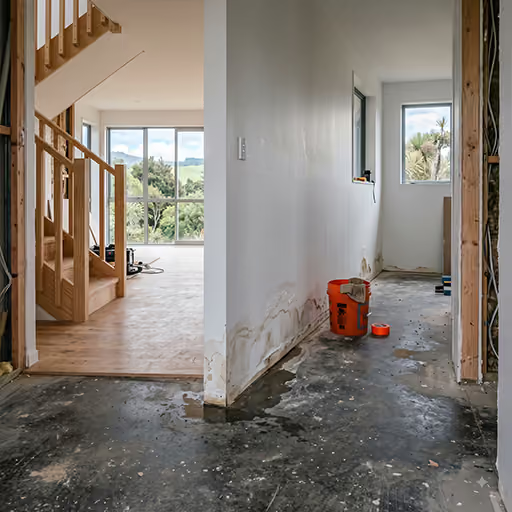
Some properties have a history. A roof leak that was patched. A bathroom that flooded twice. A weathertightness issue that was remediated, or supposedly was. The damage gets fixed, the paint goes back on, and the property looks fine.
But insurers don't just look at what a property looks like now. They want to know what it's been through.
Water damage history is one of the most significant risk signals an insurer considers when deciding whether to cover a property, and on what terms. It's a predictor of recurrence. It can indicate hidden damage that wasn't fully repaired. And in New Zealand, where weathertightness failures have affected thousands of properties, it's a topic that comes up constantly.
If you're buying, re-insuring, or reviewing cover on a property with any kind of water history, here's what you need to understand.
---
Your Duty to Disclose: What It Actually Means
In New Zealand, when you apply for insurance, you have a duty to tell your insurer about anything that a reasonable insurer would consider relevant when deciding whether to cover you and on what terms. This is sometimes called the duty of disclosure, and it applies whether you're taking out a new policy or renewing an existing one.
The practical test is this: if you know something about the property that might affect the insurer's decision, the premium they charge, the terms they offer, or whether they'd insure it at all, you need to tell them.
Water damage history almost always clears that bar.
A previous claim for storm damage, a known history of moisture ingress, a remediation job done five years ago, a leaky building report, these are all things a prudent insurer would want to know. Not because they'll automatically decline, but because they need that information to make an informed decision.
What you can't do is decide on their behalf that it's probably not relevant. That's not how it works.
---
What Specifically Should You Disclose?
This is where people get uncertain. The category of "water damage history" is broad, and not everything needs to be front and centre. But if you're in doubt, disclose it. The cost of over-disclosing is essentially zero. The cost of under-disclosing can be a declined claim.
Previous Insurance Claims
Any water-related claim on the property, whether you made it or a previous owner did, is relevant. If you know about it, tell your insurer. This includes claims for flooding, storm damage, burst pipes, roof leaks, and overflow events.
Known Leaks or Moisture Issues
A leak that was repaired, a bathroom that had ongoing moisture problems, a basement that takes on water in heavy rain, these are material facts. "It was fixed" doesn't remove the obligation to disclose. The repair history is part of the story.
Weathertightness and Leaky Building History
This is a particularly significant one in New Zealand. Properties affected by weathertightness failures, often referred to as the leaky building issue, have a documented history of moisture ingress, structural damage, and in many cases, incomplete or disputed remediation. If a property has had a weathertightness assessment, a remediation project, or any related legal proceedings, that needs to be disclosed.
Insurers treat weathertightness history seriously. Some will decline to cover certain construction types altogether. Others will insure but with specific exclusions or conditions.
Flooding or Overland Water History
If the property sits in an area with a known flood history, or if it has personally experienced flooding, that's relevant. This includes surface flooding, river overflow, and stormwater issues. A LIM report will often capture this, but the LIM isn't a substitute for disclosure, it's a starting point.
Remediation Work
If work was done to address water damage, tell your insurer what was done, when, and by whom. Ideally, you'd have documentation: a building consent if one was required, a code compliance certificate, a report from a licensed building practitioner. The quality and completeness of remediation matters.
---
What Happens If You Don't Disclose
This is the part that catches people out.
If you fail to disclose a material fact, even unintentionally, your insurer may have grounds to decline a claim, void the policy from inception, or reduce any payout to reflect what they would have paid had they known the full picture.
The timing of when this comes to light is almost always the worst possible moment: when you've just made a claim and you need the money.
Say you buy a property, don't ask about its water history, and take out insurance without mentioning the moisture issues noted in the pre-purchase inspection report. Two years later, you have a significant water damage claim. The insurer investigates, finds the prior history, and determines it wasn't disclosed. That's a real problem, and it's not one a broker can fix after the fact.
Non-disclosure doesn't have to be deliberate to have consequences. "I didn't know" can help in some circumstances, but it's not a guaranteed defence. The duty is to take reasonable steps to find out what's relevant and disclose it.
---
What Insurers Do Instead of Just Saying No
Here's something worth knowing: insurers don't always decline outright when they hear about water damage history. Often, they'll offer cover with conditions.
Common responses include:
- A specific exclusion for water damage related to the known issue, for example, excluding any claim arising from weathertightness defects
- A higher excess for water-related claims, sometimes significantly higher than the standard excess
- A requirement to complete repairs before cover commences, or within a set timeframe
- A reduced sum insured for certain parts of the building
- Referral to a specialist insurer who handles higher-risk properties
None of these outcomes are ideal. But they're all better than having a claim declined because the history wasn't disclosed at all. And when you know the terms upfront, you can make an informed decision about whether the property is worth buying, what price makes sense, and whether the cover on offer is adequate.
---
What to Ask For Before You Buy
If you're purchasing a property and you're concerned about its water history, there are specific things you should be requesting before settlement.
The property file from the council. This contains building consents, inspection records, and any code compliance certificates. It can reveal past remediation work, unconsented repairs, and whether work was signed off properly.
The LIM report. A Land Information Memorandum from the local council will include information about flooding risk, stormwater issues, and any notices affecting the property. Read it carefully, and if something looks unusual, ask questions.
Any available claims history. You can ask the vendor to provide details of any insurance claims made on the property. They're not always obliged to tell you everything, but it's worth asking directly. A vendor who's reluctant to answer questions about water history is itself useful information.
A pre-purchase building inspection. A qualified inspector will look for signs of moisture, past leaks, and weathertightness issues. If the report flags anything, take it seriously, and disclose it to your insurer.
Evidence of completed remediation. If work was done, ask for the paperwork. A remediation report, a building consent, a code compliance certificate, a warranty from the contractor. "It was fixed" isn't enough on its own.
---
Where a Broker Makes a Real Difference
Presenting a property with a water damage history to an insurer isn't straightforward. Do it badly and you'll either get declined or end up with cover that's riddled with exclusions you didn't fully understand.
What we do at Gerrards is present the risk properly. That means putting together a clear picture of the property's history, the remediation work that was done, and the current condition, and taking that to multiple insurers to find out what terms are actually available. With access to more than 30 insurers, we're not limited to one company's appetite.
Critically, we get agreed terms in writing before you commit. That means if a claim arises later, there's no ambiguity about what was disclosed and what was agreed. The insurer can't come back and say they weren't told, because they were, and it's documented.
And if a claim does happen, we advocate for you. That's something a direct insurer simply can't do, they work for themselves, not for you. We work for you.
---
Get This Right Before You Sign
Water damage history isn't a reason to walk away from a property. But it is a reason to ask the right questions, disclose what you know, and make sure your cover actually reflects the risk.
The worst outcome isn't a higher premium or an exclusion you have to manage around. The worst outcome is a claim declined because something wasn't disclosed, and finding out when it's too late to do anything about it.
If you're buying or insuring a property with any kind of water history, talk to us before you finalise anything. Same-day quotes, straight answers, and advice that's actually on your side.
This is general information only. For advice tailored to your specific situation, get in touch with our team.
Meet the author
See the author who wrote this article





























Secure the exact cover your business needs
Getting insured shouldn't be a headache. We use innovative technology to strip away the paperwork and deliver a tailored, accurate quote in record time.