Public Liability Insurance for Events in NZ: What Organisers Need to Know
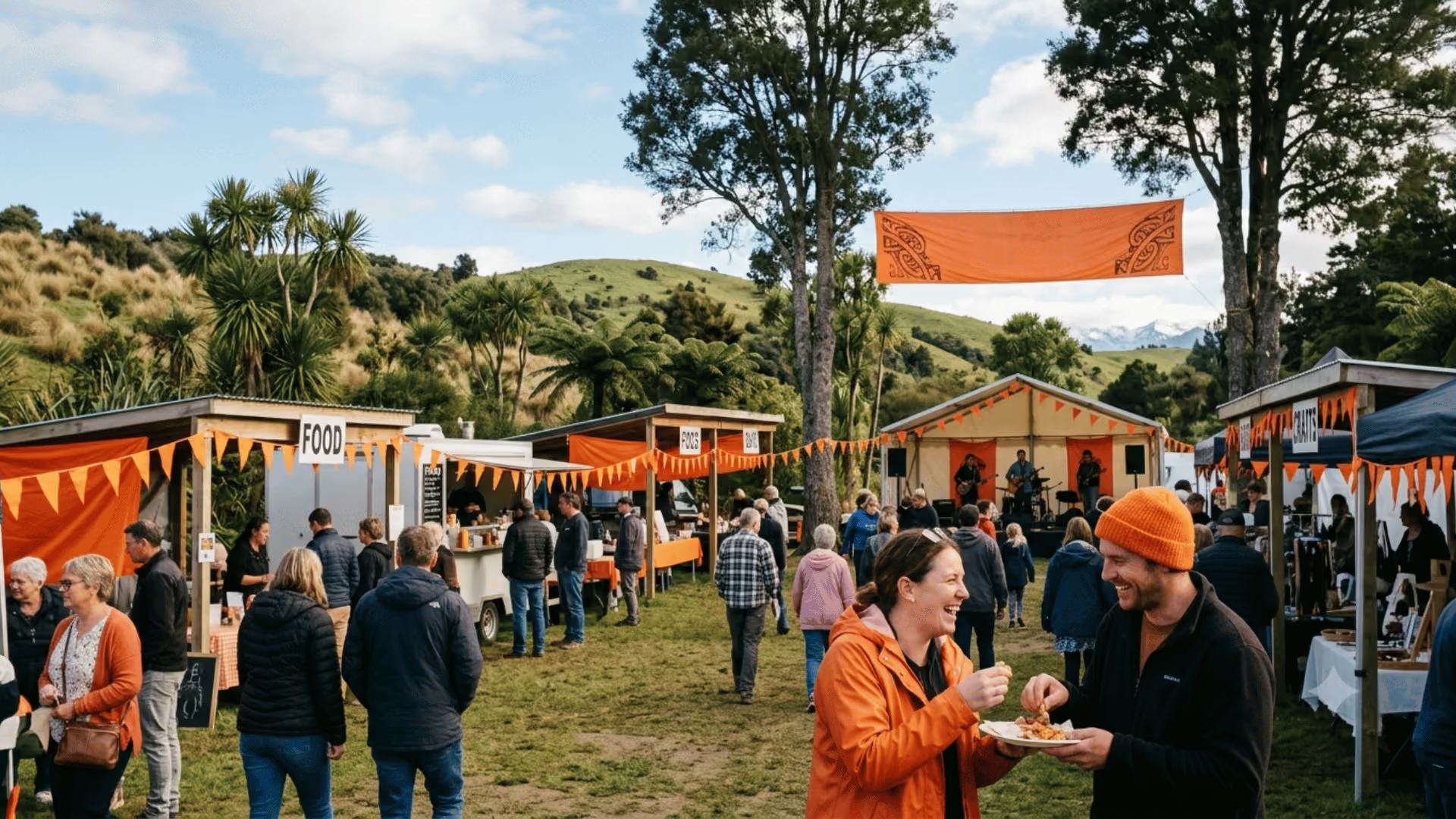
Running an event in New Zealand? Whether it's a community market, a charity fun run, a sports tournament, or a one-day festival, there's a good chance your venue or council will ask for proof of public liability insurance before you can confirm the booking.
This article explains what event public liability insurance actually covers in a New Zealand context, who needs it, what affects the cost, and what gaps to watch for, so you're not scrambling the week before your event.
Years of experience
Clients protected
5-star reviews
The venue wants proof of insurance. Now what?
You've booked the date, confirmed the venue, and started selling tickets. Then the venue coordinator sends through the hire agreement, and buried in the conditions is a requirement for public liability insurance with a minimum sum insured.
This is the moment most event organisers realise they haven't sorted it yet.
Public liability insurance for events is one of those things that feels like admin until something goes wrong. A guest trips over a cable and damages a camera. A market stall collapses and breaks a neighbouring vendor's display. A supplier's vehicle clips a fence post on the way out. These aren't dramatic scenarios, they're the kind of incidents that happen at events regularly, and they can turn into expensive disputes fast.
Here's what you actually need to know.
What public liability insurance covers at an event
At its core, event public liability insurance covers two things: third-party property damage and the legal costs of defending a claim made against you.
If someone attending your event, a guest, a vendor, a member of the public, suffers damage to their property because of something your event caused, your public liability policy is what responds. It covers the cost of repairing or replacing that property, and it covers your legal defence costs if they decide to take it further.
The ACC factor, and why this matters in New Zealand
This is where New Zealand is genuinely different from most other countries, and it's worth understanding properly.
In New Zealand, the Accident Compensation Corporation (ACC) operates a no-fault personal injury scheme. If someone is physically injured at your event, they slip, fall, or get hurt, ACC will generally cover their medical treatment and rehabilitation costs. They can't sue you for personal injury compensation the way they could in Australia or the UK.
That changes the risk profile of event liability insurance here. You're not primarily buying protection against injury compensation payouts. You're buying protection against property damage claims and the legal costs that come with any dispute, including situations where someone alleges your event caused an injury and wants to test that in court, even if ACC ultimately covers the treatment.
It doesn't mean injury is irrelevant. It means the policy works differently here, and a broker who understands the NZ context will structure it accordingly.
Who actually needs event public liability insurance
The short answer: if you're organising an event where members of the public are present, you probably need it.
More specifically:
- Event organisers running festivals, markets, concerts, exhibitions, or community events
- Sports clubs hosting competitions, tournaments, or fundraising events open to the public
- Charities and not-for-profits running fundraising events, galas, or community programmes
- Clubs and societies, incorporated or otherwise, that hold regular or one-off events
- Market stallholders who need their own cover separate from the event organiser's policy
- Corporate event organisers running product launches, client functions, or staff events at external venues
If you're a stallholder at a market, don't assume the market organiser's policy covers you. It usually doesn't. You're running your own operation, and you need your own cover.
One-off event cover versus an annual policy
This is one of the first questions we work through with clients.
One-off or short-term event policies are designed for a single event or a defined period. They make sense if you're running a one-day market, a charity fundraiser, or a community event that doesn't repeat. You get cover for the event itself, setup, the event day, and pack-down, without committing to a full annual premium.
Annual event liability policies make more sense if you're a club, society, or organisation that runs multiple events throughout the year. Buying individual policies for each event quickly becomes expensive and administratively painful. An annual policy covers your ongoing event activity under a single arrangement, often with better terms.
The right answer depends on how often you're running events and what type of activity is involved. A broker can run through both options and show you the actual numbers.
What affects the cost of cover
There's no single price for event public liability insurance. What you pay depends on a combination of factors, and being upfront about all of them when you apply will get you a more accurate quote, and avoid problems at claim time.
Attendee numbers are one of the biggest factors. A 50-person community dinner carries different risk than a 2,000-person outdoor festival.
Activity type matters a lot. A market or exhibition is lower risk than an event involving physical activity, rides, inflatables, or contact sports. The more physical the activity, the more carefully insurers look at the risk.
Alcohol service increases the risk profile. Events where alcohol is served, especially where the organiser is responsible for service, attract more scrutiny from insurers.
Food handling is another factor. If food is being prepared and served on-site, that introduces additional liability exposure.
Venue type plays a role too. An indoor venue with controlled access is different from an outdoor event on public land or a beach.
Duration and setup complexity also factor in. A multi-day event with significant infrastructure, stages, marquees, temporary structures, is assessed differently from a single afternoon event.
Describe your event accurately. Underestimating attendee numbers or leaving out the bouncy castle might seem like it'll save you money on the premium, but it creates a coverage gap that matters exactly when you need the policy to respond.
What event public liability insurance does NOT cover
Knowing what's excluded is just as important as knowing what's included.
Your own property isn't covered. If your equipment, signage, or marquee gets damaged, that's a separate question, usually covered under a material damage or equipment policy, not public liability.
Event cancellation is a different product entirely. If your event gets cancelled due to weather, a performer pulling out, or an unforeseen circumstance, public liability won't help. Event cancellation insurance is a separate policy.
Participant injury, in the ACC sense, is largely handled by the ACC scheme, as explained above. But check whether your event involves activities where ACC may not apply, or where additional cover for participants makes sense.
Your own legal liability to employees is covered under employers' liability, not public liability. If a paid staff member is injured, that's a different policy.
Common gaps worth checking
These are the areas where we regularly see event organisers caught out.
Volunteers. Many event policies don't automatically extend to cover volunteers as if they were employees. If your event runs on volunteer labour, and most community events do, check whether they're included, and under what terms.
Subcontracted suppliers. If you hire a sound company, a catering team, or a security firm, their actions can still create liability for you as the event organiser. Make sure your policy addresses this, and ask your suppliers for their own certificates of currency.
Hired equipment. Damage to equipment you've hired, PA systems, tables, marquees, may not be covered under public liability. It might need to be covered under a hired equipment or material damage section.
Liquor liability. If your event involves alcohol service and something goes wrong because of it, standard public liability policies may have exclusions or conditions around this. Worth discussing explicitly with your broker.
What to have ready when you ask for a quote
The more information you can provide upfront, the faster and more accurate your quote will be. When you contact Gerrards, it helps to have:
- The event date, duration, and location
- Expected attendee numbers (maximum, not just average)
- A description of activities, including anything physical, food-related, or involving alcohol
- Whether you're using volunteers, paid staff, or subcontractors
- The sum insured required by your venue or council (often stated in the hire agreement)
- Whether you need a one-off policy or an annual arrangement
If your venue has sent you a hire agreement with insurance requirements, bring that too. It tells us exactly what the certificate of currency needs to say.
Getting it sorted without the last-minute scramble
We see this regularly at Gerrards, an organiser contacts us three days before their event because the venue just reminded them about the insurance requirement. It's fixable, but it's stressful and it limits your options.
With access to more than 30 insurers, we can compare the market and turn around a quote quickly. But the best time to sort event public liability insurance is when you're confirming your venue booking, not the week before doors open.
If you're running an event in New Zealand and need cover sorted, get in touch with our team. We'll ask the right questions, compare your options, and make sure the policy actually fits what you're doing.
This is general information only. For advice tailored to your specific event and circumstances, contact the Gerrards team directly.
Meet the author
See the author who wrote this article


















Secure the exact cover your business needs
Getting insured shouldn't be a headache. We use innovative technology to strip away the paperwork and deliver a tailored, accurate quote in record time.