Goods on Hook & Lifting Liability
Goods on hook insurance covers damage to property your crane, telehandler, hiab or forklift is lifting or carrying, filling the gap that standard liability policies leave when property is in your care, custody or control.
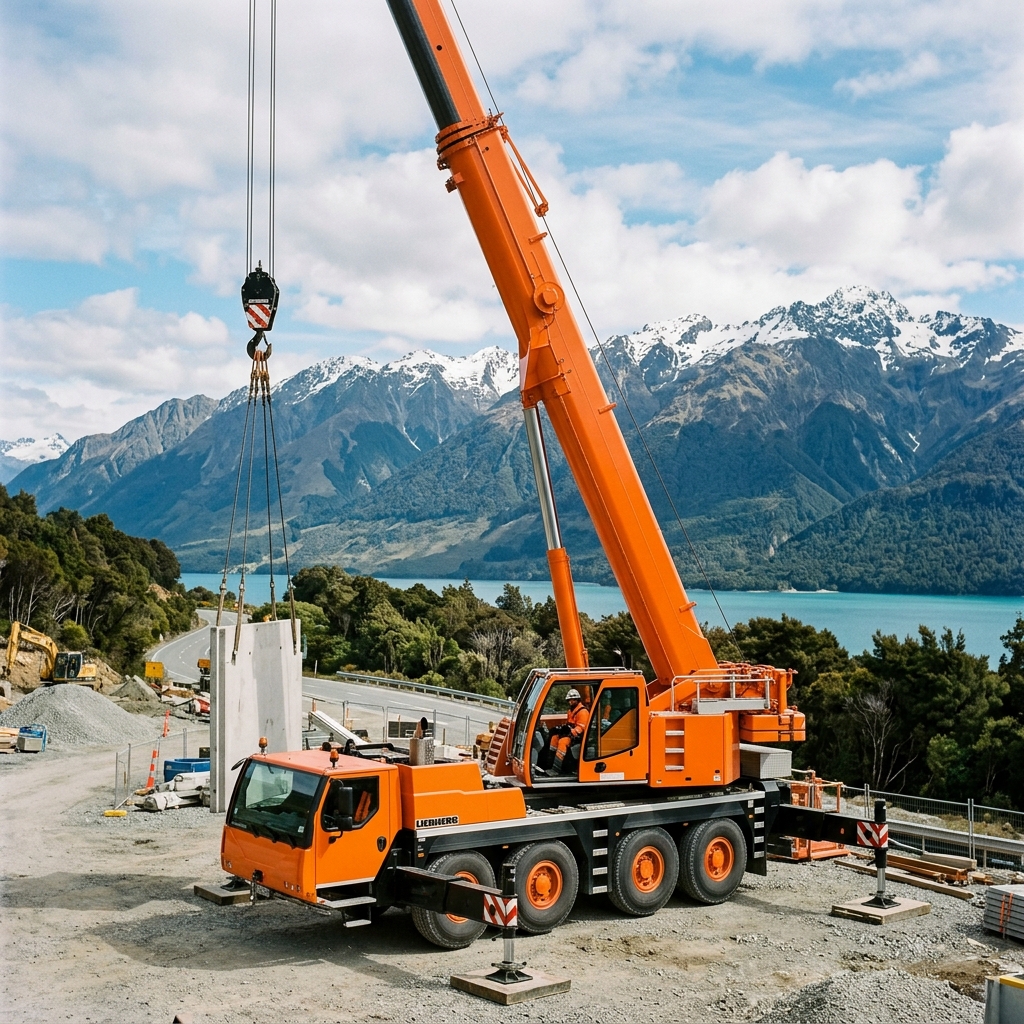
What Is Goods on Hook Insurance?
When you lift someone else's property with a crane, telehandler, hiab or forklift, standard liability policies often exclude it. That property is considered to be in your "care, custody or control", and most general liability wordings specifically carve that out.
Goods on hook insurance is an extension that fills that gap. It responds when property is damaged while being lifted, lowered, moved or carried by your lifting equipment.
Key points:
- Standard liability policies commonly exclude property in your care, custody or control
- A goods on hook extension can reinstate cover for property being lifted or carried
- It applies to cranes, telehandlers, hiabs, forklifts and similar plant
- Policy wordings vary, some include exclusions for fragile or high-value loads
- This is general information only. For advice tailored to your situation, get in touch with our team.

How this could protect you
Cover for third-party property damaged while being lifted, lowered or carried by your equipment
Advice on whether your current policy includes a goods on hook extension, or leaves you exposed
Comparison across up to 20 insurers so you're not stuck with one insurer's wording or price
A broker who advocates for you at claim time, not for the insurer
Annual policy review to catch gaps before a claim reveals them
Cover structured to work with your plant, liability and carriers policies, not against them
Years of experience
Clients protected
5-star reviews
What's covered
What Goods on Hook Insurance Covers
Goods on hook insurance responds to property damage that occurs while someone else's property is being lifted, lowered, moved or carried by your crane, telehandler, hiab, forklift or similar lifting equipment.
Standard liability policies typically exclude property in your care, custody or control. A goods on hook extension reinstates cover for that specific exposure, the act of lifting.
Typically covered:
- Physical damage to third-party property while it's attached to your lifting equipment
- Liability arising from that damage, legal costs and compensation
- Loads lifted by owned, hired or otherwise operated equipment
Common exclusions to check:
- Fragile or inherently breakable loads
- Damage caused by overloading or defective rigging
- Consequential financial loss flowing from the damaged property
- Property owned by the insured
Policy wordings vary across the market. Some are broader, some are narrower. Always check the specific wording with your broker before assuming cover applies.
Why you need this
Why Lifting Operators Can't Afford to Skip This
If you lift property that belongs to someone else, your standard liability policy probably doesn't cover it. The care, custody or control exclusion is one of the most common, and most misunderstood, gaps in commercial liability insurance.
The loads being moved on New Zealand construction sites, warehouses and logistics operations are often high-value. A single incident involving an uninsured load can result in a claim that comes entirely out of your pocket.
Goods on hook cover is typically an extension rather than a standalone policy. That means it needs to be structured correctly alongside your plant insurance, general liability and, if you're also transporting goods, your carriers liability cover.
Getting the programme to fit together properly is exactly what a broker is for. Every business is different, your policy needs will depend on the equipment you operate, the loads you lift and the contracts you work under. Talk to your broker about whether this applies to your situation.
How Gerrards Gets You the Right Cover
Four steps from first call to confirmed cover, with a same-day response.
Tell Us About Your Operations
We ask about the equipment you use, the loads you lift, and who owns the property you're handling. A quick conversation.
We Review What You've Already Got
If you have existing cover, we read the actual wording, not just the summary, and tell you plainly where the gaps are.
We Compare the Market
We go to up to 20 insurers and find wordings that actually fit your work. You see the options, not just the one we prefer.
You Decide, We Handle the Rest
Once you're happy with the cover, we bind it and make sure it fits with your other policies. And we're here if a claim comes in.
Pricing factors
What Affects the Premium for Goods on Hook Cover
Premiums for goods on hook extensions vary depending on several factors. Here's what typically influences the cost:
Type and number of lifting equipment: A single forklift in a warehouse presents a different risk profile to a fleet of mobile cranes on construction sites. More equipment, or higher-risk equipment, generally means a higher premium.
Value of loads typically lifted: Insurers want to understand the maximum value of property you're likely to have on hook at any one time. Higher-value loads mean higher potential claims.
Nature of the loads: Fragile, awkward or high-risk loads (glass, prefabricated panels, specialist plant) attract more scrutiny. Some insurers price this differently or apply specific conditions.
Operator experience and certifications: Documented training, current operator certificates and a clean claims history all work in your favour at renewal.
Claims history: A history of goods on hook incidents will affect your premium. A clean record is worth protecting.
How the cover is structured: Whether the goods on hook extension sits within a plant liability policy or a general liability policy affects how it's priced. Getting the structure right can also affect the premium.
Local brokers, New Zealand-wide
From our Christchurch head office to our teams in Auckland East, Bay of Plenty and Manawatu, Gerrards brokers arrange cover for businesses across New Zealand. Find the team closest to you.
Related FAQs
The answers that matter when you're deciding on coverage.
You're right to flag it before the job, not after. If the value of the load exceeds your extension's sub-limit, you're carrying the difference yourself. Some insurers will consider increasing the sub-limit on request, particularly if you can describe the specific lift and the load value. Others may require a separate declaration. Either way, it's a conversation to have with your broker before the crane goes up, not a problem to discover when a claim is being settled short.
Potentially, yes. If a subcontractor is working under your direction and their lift damages a client's property, the client may look to you as the principal contractor. Whether your goods on hook extension responds to that scenario depends on how your policy defines the insured and what equipment it covers. Some wordings extend to equipment 'otherwise the responsibility of the insured,' which may capture subcontractor plant, but that's not universal. This is exactly the kind of structural question to work through with a broker before a job starts.
Pre-existing damage is a legitimate defence, but you'll need to be able to demonstrate it. If the property was already damaged before you lifted it, most goods on hook extensions wouldn't respond to that claim, the damage didn't occur during the lift. Document the condition of loads before you attach your gear wherever you can. Photos before and after are worth more than a conversation after the fact. Talk to your broker as soon as a claim is threatened, not after.
Not necessarily. Some goods on hook extensions are written narrowly and apply only to cranes. Others are broader and cover any lifting equipment under your control. If your wording says 'crane' and your telehandler isn't specifically included, you may have a gap. It's a common mismatch we see in the market, the equipment list in the extension doesn't always keep pace with how operators actually work. Check the exact wording, not just the policy name.
It's likely a goods on hook claim, not a general liability claim. The moment that beam was attached to your hiab, it was in your care, custody or control, and most general liability policies exclude property damage in that situation. A goods on hook extension exists specifically to fill that gap. Whether your current policy includes that extension, and whether the circumstances of the damage fall within its scope, is worth checking with your broker before you lodge anything.
What our clients are saying
Businesses and families trust us with what matters
The Gap Nobody Talks About Until a Load Hits the Ground
You're on site. Your crane swings a load across the building and something goes wrong, a sling fails, the load shifts, and a piece of expensive plant belonging to your client ends up damaged on the ground. You call your insurer expecting them to sort it.
Then you find out your liability policy doesn't cover it.
This is the goods on hook problem. It can catch operators out, and it's not because they bought bad insurance. It's because most standard liability policies contain an exclusion for property in your care, custody or control, and the moment you attach a sling to someone else's load, that property is squarely in your care, custody or control.
Goods on hook insurance exists specifically to fill that gap.
Why Standard Liability Policies Leave You Exposed
General liability insurance is designed to cover your legal liability for injury or damage to third parties. What it's not designed to cover is damage to property you're actively handling. The logic from an insurer's perspective is that once you take control of something, you're responsible for it, and that responsibility sits outside the scope of a standard liability policy.
The exclusion is usually worded something like: property owned, occupied, or held in trust by, or in the care, custody or control of the insured. It's a standard carve-out across most commercial liability wordings in the New Zealand market.
So if you're operating a crane on a construction site and you damage the load you're lifting, your general liability policy may respond to damage to a bystander's property, but not to the damage to the load itself.
That's the gap goods on hook insurance is built to address.
What Goods on Hook Insurance Actually Covers
A goods on hook extension, sometimes built into a plant liability policy, sometimes added separately, responds to property damage that occurs while property is being lifted, lowered, moved or carried by your equipment.
The key trigger is the act of lifting. The property needs to be on or attached to your lifting equipment at the time of the damage. Once it's on the ground and disconnected, different policy sections may apply.
Which Equipment Does It Apply To?
Goods on hook cover is relevant for any operator using lifting equipment as part of their work. That typically includes:
- Cranes: tower cranes, mobile cranes, crawler cranes
- Telehandlers: particularly common in construction and agriculture
- Hiabs and truck-mounted cranes: used extensively in transport and logistics
- Forklifts: warehouse, distribution and construction site use
If your business involves lifting or moving property that belongs to someone else, this is worth understanding. You can read more about specific equipment cover for telehandlers and forklifts on the relevant pages.
What Policies Typically Exclude
Not everything is covered, and this is where reading the wording carefully matters. Common exclusions across market wordings include:
- Fragile loads: glass, ceramics, artworks, and other items prone to breakage may be specifically excluded or subject to conditions
- Overloading: damage caused by lifting beyond the rated capacity of the equipment
- Defective rigging or slings: some wordings exclude damage attributable to faulty lifting gear
- Property owned by the insured: the extension covers third-party property, not your own
- Consequential loss: the financial loss flowing from the damaged property (lost production, delays) is often excluded unless specifically included
Every policy is different. Some wordings are broader, some are narrower. That's exactly why it pays to have someone read the actual wording before you assume you're covered.
The Care, Custody or Control Problem, Explained Plainly
This exclusion can trip up operators across lifting trades. It's worth understanding why it exists and what it actually means in practice.
When an insurer writes a liability policy, they're pricing the risk of you accidentally causing harm to the world around you. They're not pricing the risk of you damaging the specific thing you're being paid to handle. That's a different risk, closer to a professional indemnity or bailee risk than a pure liability risk.
So they exclude it.
The goods on hook extension is the insurer's way of saying: we'll reinstate that cover, but only for the specific act of lifting, and subject to the conditions in the wording.
What this means practically:
- If you're a crane operator and you damage a load mid-lift, the extension may respond
- If you set the load down and then damage it while repositioning on the ground, you may be outside the extension's scope
- If the load was already damaged before you lifted it, there's likely no claim
The boundary between "on hook" and "not on hook" can be contested. That's one of the reasons having a broker who understands this area matters, particularly if a claim gets complicated. If you've ever had a machinery claim declined, you'll know how quickly these distinctions become expensive.
Who Needs Goods on Hook Insurance?
If you operate lifting equipment and you ever lift property that belongs to someone else, you need to understand whether your current policy covers it.
That's a broad group. It includes:
- Crane hire companies: lifting loads on behalf of construction clients
- Construction contractors: using telehandlers or hiabs to move materials on site
- Transport and logistics operators: using truck-mounted cranes to load and unload freight
- Warehousing and distribution businesses: forklift operations handling customer stock
- Rigging and lifting specialists: whose entire business is moving heavy or awkward loads
- Hire companies: who supply operated plant (where the operator is their employee)
The common thread is third-party property. If the load belongs to you, this isn't the relevant cover. If it belongs to a client, a contractor, or anyone else, this is exactly the gap you need to check.
How Goods on Hook Fits Into Your Broader Insurance Programme
Goods on hook isn't a standalone policy. It's typically an extension, either built into a plant and machinery liability policy or added to a general liability policy by endorsement.
That means it doesn't exist in isolation. It sits alongside:
- Plant and machinery insurance: covering physical damage to your own equipment. See our page on machinery insurance in New Zealand for how that works.
- General liability insurance: covering your broader third-party liability exposure
- Carriers liability insurance: relevant if you're transporting goods as well as lifting them. Carriers liability insurance covers a different but related gap.
- Statutory liability: covering defence costs and reparation for unintentional breaches of legislation (fines under the Health and Safety at Work Act can't legally be insured)
The interaction between these policies matters. A claim involving a damaged load on a worksite might touch plant insurance, goods on hook, and general liability all at once. If those policies are with different insurers and haven't been structured to work together, you can end up with gaps, or worse, two insurers pointing at each other.
This is one of the practical reasons to use a broker rather than buying policies piecemeal. Getting the programme to fit together properly is the job.
What to Check in Your Current Policy
If you're already insured and you're not sure whether goods on hook cover is included, here's a practical checklist to work through with your broker:
Goods on Hook Policy Checklist
- [ ] Does your liability policy include a goods on hook extension, or does it exclude property in your care, custody or control entirely?
- [ ] Is the extension limited to specific types of equipment (cranes only, or does it extend to telehandlers, hiabs and forklifts)?
- [ ] Are there exclusions for fragile loads, and does that affect the type of work you do?
- [ ] Does the extension cover property damage only, or does it extend to consequential loss?
- [ ] Is the sum insured under the extension adequate for the highest-value loads you typically lift?
- [ ] Does the extension apply to hired-in equipment as well as owned equipment?
- [ ] Are there conditions around operator certification or equipment maintenance that could affect a claim?
- [ ] If you use subcontractors who operate lifting equipment, are they covered under your policy or do they need their own?
If you can't answer these questions from memory, that's not a criticism, most people can't. But it's worth finding out before you need to make a claim.
Why This Is Worth Getting Right
A damaged load on a construction site isn't just an insurance problem. It's a relationship problem. Your client expects their property to arrive intact. If it doesn't, and your insurer declines the claim because the right extension wasn't in place, you're paying out of pocket, or losing the client, or both.
The loads being lifted on New Zealand worksites aren't cheap. Structural steel, prefabricated panels, specialist plant, HVAC equipment, these are high-value items. A single incident involving an uninsured or underinsured load can be a serious financial event for a small operator.
At Gerrards, we work with operators across the lifting and plant sector. We compare wordings from up to 20 insurers, and we know where the gaps tend to appear. When a claim comes in, we advocate for our clients, not for the insurer. That distinction matters when a claim is disputed and the wording is being interpreted.
This is general information only. For advice tailored to your situation, get in touch with our team.
Secure the exact cover your business needs
We'll review your current cover, identify any gaps, and compare options from up to 20 insurers, with a same-day response. No obligation.