Harvester & Header Insurance
Specialist insurance for harvesters, headers and high-value harvest machinery in New Zealand, covering seasonal use, foreign-object ingestion, breakdown during peak season, and transit between farms.
What This Page Covers
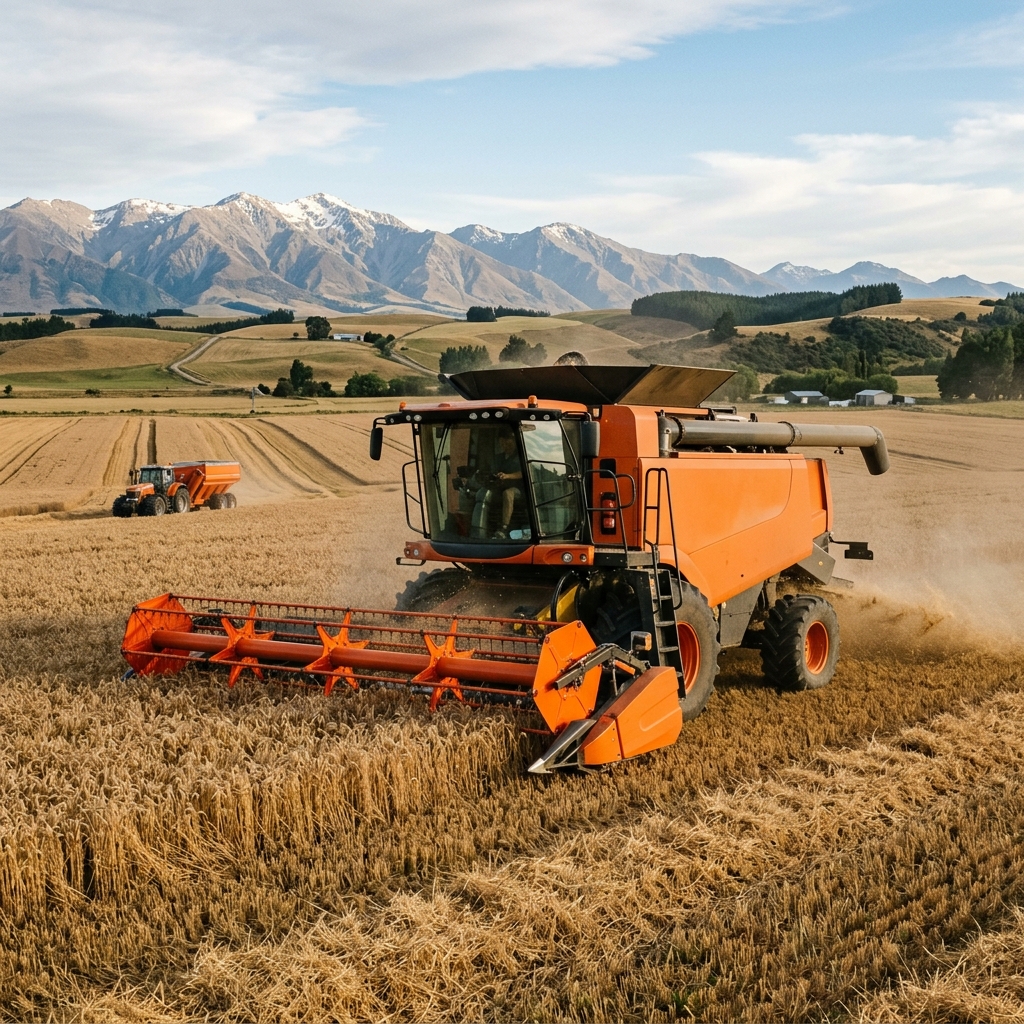
Harvester insurance in NZ is a specialist area that sits apart from general farm machinery cover. This page explains the key risks facing agricultural contractors and cropping farms, foreign-object ingestion, peak-season breakdown, transit exposure, and getting the sum insured right on a high-value machine. It also covers how laid-up periods work, why loss of income matters as much as the machine itself, and what to ask a broker before harvest season starts.

How this could protect you
Foreign-object ingestion cover confirmed, so a rock in the crop doesn't become an uninsured repair.
Breakdown cover assessed for your machine, because harvest season is the worst time to find a gap.
Sum insured reviewed annually so you're not under-insured when it matters most.
Loss-of-income options explored for contractors whose revenue depends on the machine running.
Transit and laid-up cover structured correctly for seasonal use and inter-farm movements.
Claims advocacy at your side, we work for you, not the insurer, if a dispute arises.
Years of experience
Clients protected
5-star reviews
What's covered
What Harvester Insurance Typically Covers
Harvester and header insurance is built around accidental physical damage to the machine, collision, rollover, fire, theft, and storm damage. But for harvest machinery, the standard cover is rarely enough on its own.
Key extensions to look for include:
- Foreign-object ingestion: accidental damage caused by rocks, wire, or other debris entering the machine during operation
- Machinery breakdown: sudden and unforeseen mechanical or electrical failure requiring repair before the machine can work again
- Loss of contracting income: revenue lost while the machine is off the road following a covered loss
- Transit cover: protection while the machine is being transported between properties
- Laid-up provisions: adjusted cover during off-season storage periods
Not all of these are included as standard. Some are optional extensions; others require a separate policy. Every business is different, your policy needs will depend on your specific circumstances, so talk to a broker about what your operation actually requires.
Why you need this
Why Specialist Cover Matters for Harvest Machinery
A harvester isn't just a piece of equipment, for many operations, it's the business. When it goes down during the six-week window that determines the year's income, the consequences go well beyond a repair bill.
Standard motor or farm policies often exclude the risks most likely to affect harvest machinery: foreign-object ingestion is a common exclusion, mechanical breakdown is typically separate, and loss of contracting income is rarely automatic.
The value of these machines also creates a sum-insured problem. Under-insuring a high-value harvester, even slightly, can mean a settlement that doesn't cover replacement. Getting the valuation right, and keeping it current, is something a broker should be checking every year.
For agricultural contractors especially, the income exposure is as significant as the physical asset. A policy that covers the machine but not the lost revenue from downed contracts may leave a contractor seriously out of pocket even after a successful claim. This is general information only, for advice tailored to your situation, get in touch with our team.
How We Sort Your Harvester Cover
Four straightforward steps, from first call to policy in place. We aim to respond the same day.
Tell Us About Your Operation
We ask about your machine, how it's used, your seasonal pattern, and whether you're a contractor or a cropping farm. The details shape the cover.
We Compare the Market
We go to up to 20 insurers and find policies that actually cover harvest machinery properly, including the extensions that matter for your situation.
We Walk You Through the Options
No jargon, no pressure. We explain what each option covers, where the gaps are, and what we'd recommend, and why.
Cover Placed, Policy Reviewed Annually
We get your cover in place and check back every year to make sure the sum insured is current and the policy still fits your operation.
Pricing factors
What Affects the Premium on Harvester Insurance
Several factors influence what you'll pay for harvester and header insurance in NZ:
- Machine value and type: higher-value machines and specialist headers attract higher premiums; agreed-value policies may cost more than market-value policies but remove settlement uncertainty
- Use type: agricultural contracting (working across multiple properties for multiple clients) is assessed differently from a farm-owned machine used only on one property
- Extensions selected: adding foreign-object ingestion cover, machinery breakdown, and loss-of-income extensions will increase the premium, but these are often the most important parts of the cover
- Claims history: a history of ingestion or breakdown claims will affect pricing; some insurers are more competitive for clean-history operators
- Storage and security: machines stored in locked sheds with appropriate security measures generally attract better terms than those left in open paddocks
- Seasonal use and laid-up periods: if the machine is genuinely off-road for extended periods and a laid-up provision is available, this can affect the overall premium structure
Every business is different. The right premium is the one attached to a policy that actually covers your risks, not the cheapest number on a comparison sheet.
Local brokers, New Zealand-wide
From our Christchurch head office to our teams in Auckland East, Bay of Plenty and Manawatu, Gerrards brokers arrange cover for businesses across New Zealand. Find the team closest to you.
Related FAQs
The answers that matter when you're deciding on coverage.
Transit cover is a genuine gap risk, and it's one that catches people out. When a header is loaded onto a truck, whether it's covered under your machinery policy, the transport operator's policy, or neither depends entirely on how both policies are structured. The two don't automatically dovetail. If you're moving equipment regularly between properties, it's worth confirming transit cover is explicitly in place rather than assuming it carries across.
Some policies do extend to cover loss of income from contracting when a machine is off the road due to a covered loss, but it's not included in every policy and the conditions vary. For a contractor whose revenue depends on a narrow harvest window, this extension can be as important as the physical damage cover itself. It's one of the first things we'd look at when structuring cover for a contracting operation.
Mechanical breakdown and accidental damage are different covers, and standard motor policies generally exclude breakdown as a default. Some specialist plant wordings do extend to machinery breakdown, covering sudden and unforeseen physical damage that stops a machine from operating and requires repair before it can work again. Whether your policy includes that extension, or whether you need a separate machinery breakdown policy, is worth checking now rather than when you're standing next to a seized machine at 11pm.
Some specialist plant policies include a laid-up provision that recognises this kind of seasonal pattern. The machine still needs cover while it's stored, fire, theft, and storm damage don't take a break, but the risk profile is different from active harvest use, which can affect the premium. There are usually conditions attached, including a minimum period and a declaration that needs to be lodged before the laid-up period begins. Not every policy offers this, so it's worth asking.
Not automatically. Foreign-object ingestion is excluded as a default under many rural motor policies, but some policies offer it as a specific extension. Whether that extension is active on your policy, and what conditions apply, is something worth confirming before harvest starts rather than after the damage happens. There's often a separate excess that applies to ingestion claims, and the scope of what's covered can vary between insurers.
What our clients are saying
Businesses and families trust us with what matters
The Machine That Earns Its Keep in Six Weeks
A harvester doesn't sit idle all year. It earns its keep in a narrow window, sometimes just a few weeks, and when it goes down during that window, the financial hit isn't just the repair bill. It's the contracts you can't fulfil, the grain sitting in the paddock, and the phone calls you don't want to make.
Harvester insurance in NZ isn't complicated in principle. But the details matter enormously, and most standard motor or plant policies weren't written with a $500,000 combine header in mind.
Here's what you actually need to think about.
Foreign-Object Ingestion: The Risk Nobody Talks About Until It Happens
Ask any agricultural contractor what keeps them up at night during harvest and foreign-object ingestion is usually near the top of the list. Rocks, fence wire, star pickets, irrigation fittings, harvest machines eat whatever's in the crop, and the damage can be catastrophic.
The problem? Some standard motor policies exclude ingestion of foreign objects into agricultural implements by default. It's buried in the exclusions, and it catches people out.
Some policies do extend to cover this, but it's an extension, not a given. It typically applies specifically to accidental loss caused by a foreign object entering the machine while it's being operated for its intended purpose. Whether that extension is on your policy, and what conditions attach to it, is exactly the kind of thing worth confirming with a broker before you start cutting.
Don't assume. Check.
What to Ask Your Broker
- Does the policy specifically extend to foreign-object ingestion on harvest implements?
- Is there a separate excess that applies to ingestion claims?
- Does the extension cover resultant damage to other parts of the machine, or only the part directly affected?
- Are there any operational conditions that need to be met for the extension to apply?
These aren't trick questions. They're the difference between a claim that gets paid and one that doesn't.
Breakdown During Peak Season: The Timing Problem
Machinery breakdown cover and accidental damage cover are different things. Most people know this in theory. In practice, the distinction matters most when a gearbox seizes at 11pm on a Friday in the middle of harvest.
Standard motor policies generally exclude mechanical or electrical breakdown, that's a separate policy extension or a separate product altogether. Some specialist plant wordings do include machinery breakdown as an add-on, covering sudden and unforeseen physical damage that causes a machine to stop working and require repair before it can operate again.
For harvesters and headers, machinery breakdown insurance is worth serious consideration. The question isn't whether your machine might break down, it's whether you can afford to wait for a repair bill that isn't covered.
And it's not just the repair cost. Some policies extend to cover loss of income from contracting when a machine is off the road due to a covered loss. If your harvester is your business, that revenue protection can be as valuable as the physical damage cover itself. Talk to your broker about whether a loss-of-income extension makes sense for your operation.
Seasonal Use and Laid-Up Periods
A harvester might be actively working for six to ten weeks a year. For the rest of the time, it's in a shed.
Some specialist plant policies recognise this with a laid-up provision, a period where the machine is declared out of operation and stored securely, which can affect the premium. The machine still needs to be covered during this time (fire, theft, and storm damage don't take a season off), but the risk profile is different from active harvest use.
If your policy has a laid-up option, there are usually conditions attached: the machine needs to be genuinely out of operation, stored appropriately, and a declaration needs to be made before the laid-up period starts. Moving the machine for routine servicing or loading it onto a transporter is generally still permitted, but using it for harvest work during a declared laid-up period may mean the machine isn't covered for that use.
For cropping farms and contractors who want to manage premiums sensibly across the year, it's worth asking whether this option is available and what the conditions are. Not every policy offers it, and the minimum period requirements vary.
Moving Headers Between Farms: Transit and Third-Party Exposure
Headers and large harvest headers don't stay on one property. They move, sometimes frequently, sometimes over long distances, sometimes on roads with other traffic.
Transit cover matters here. When a header is being transported on a truck or trailer, is it covered under the machinery policy, the truck's policy, or neither? The answer depends on how the policies are structured, and gaps are common.
There's also the question of third-party liability when oversized loads are moving on public roads. That's a separate conversation from the physical damage cover on the machine itself, but it's one worth having.
For contractors who regularly move equipment between properties, insuring financed machinery is another angle worth considering, particularly if the machine is subject to a finance agreement that specifies how it must be insured during transit and storage.
Getting the Sum Insured Right on a High-Value Machine
This is where a lot of policies quietly fail.
Harvesters and headers are expensive. A modern self-propelled harvester can represent a significant portion of a farming operation's total asset value. Getting the sum insured wrong, either too low, or based on an outdated valuation, can mean a settlement at claim time that doesn't come close to replacing what you've lost.
Most policies settle on either market value or sum insured, whichever is lower. If you've insured your machine for less than its current market value, you'll feel that gap at claim time.
Agreed value machinery insurance removes that uncertainty. Instead of arguing about market value after a loss, the insured value is agreed upfront. For high-value harvest machinery, this is often the smarter approach, particularly for machines that are hard to value accurately because of age, condition, or specialist attachments.
The flip side is that agreed value policies require you to keep the insured value current. A machine insured at a value set three years ago may be significantly under-insured today, especially given the way machinery prices have moved. Annual reviews matter.
A Practical Checklist: Before Harvest Season Starts
- Sum insured reviewed? Does it reflect current replacement cost, not what you paid five years ago?
- Foreign-object ingestion covered? Confirmed as an active extension on the policy, not just assumed?
- Breakdown cover in place? Separate from accidental damage, check whether it's included or needs to be added.
- Transit cover confirmed? When the header is on a truck between farms, is it covered?
- Loss-of-income extension? If the machine is your income, is there cover for lost contracting revenue during a repair period?
- Laid-up period declared correctly? If using a laid-up provision, has the declaration been lodged before the off-season starts?
- Finance obligations met? If the machine is financed, does the policy meet the lender's requirements?
- Broker contact details handy? At 11pm during harvest, you need to know who to call.
Agricultural Contractors vs. Cropping Farms: Different Exposures
The risks aren't identical for everyone.
An agricultural contractor running a harvesting business has income exposure that a cropping farm doesn't. If the machine goes down, the contractor loses revenue from multiple clients. The loss-of-income dimension is more acute, and the policy structure needs to reflect that.
A cropping farm that owns its own harvester has a different concern: the crop sitting in the paddock, the weather window closing, and the cost of hiring a contractor to finish the job if the machine can't be fixed in time. Some policies extend to cover consequential costs in this scenario, many don't. Worth checking.
For farms running multiple pieces of harvest equipment, tractors, chaser bins, grain carts alongside the main harvester, it's worth looking at how the whole fleet is structured. Farm machinery and equipment insurance covers the broader picture, and a broker can help identify whether specialist harvester cover sits alongside a general farm policy or replaces part of it.
For contractors who also run tractors as part of their harvest operation, tractor insurance and the broader machinery insurance options are worth reviewing at the same time, it's usually more efficient to structure the whole fleet together than to pick up policies piecemeal.
What Gerrards Does Differently
We work with up to 20 insurers. That matters for harvester insurance because the market for specialist agricultural machinery isn't uniform, policy wordings differ significantly, extensions vary, and the insurer that's right for a cropping farm in Canterbury isn't necessarily the right fit for a contracting operation in Hawke's Bay.
We don't push a single product. We look at your operation, your machine values, your seasonal pattern, and your income exposure, then we find the policy that actually fits.
And at claim time, we work for you. Not the insurer. If a claim is disputed or a settlement offer doesn't reflect what your machine was worth, we advocate on your behalf. That's something a direct insurer can't do, there's an obvious conflict of interest when the person handling your claim works for the company paying it.
We're available 8am to 7pm, seven days a week. Including harvest season.
This is general information only. For advice tailored to your specific operation and machinery, get in touch with our team.
Secure the exact cover your business needs
Talk to a Gerrards broker before the season starts. We'll review your current policy, check for gaps, and compare options across up to 20 insurers, with a same-day response.