Tractor Insurance
Tractor insurance in New Zealand isn't one-size-fits-all, the right cover depends on how you use your machine, where it operates, and whether it's farm-owned, contractor-owned, or financed. Gerrards helps you find the policy that actually fits.
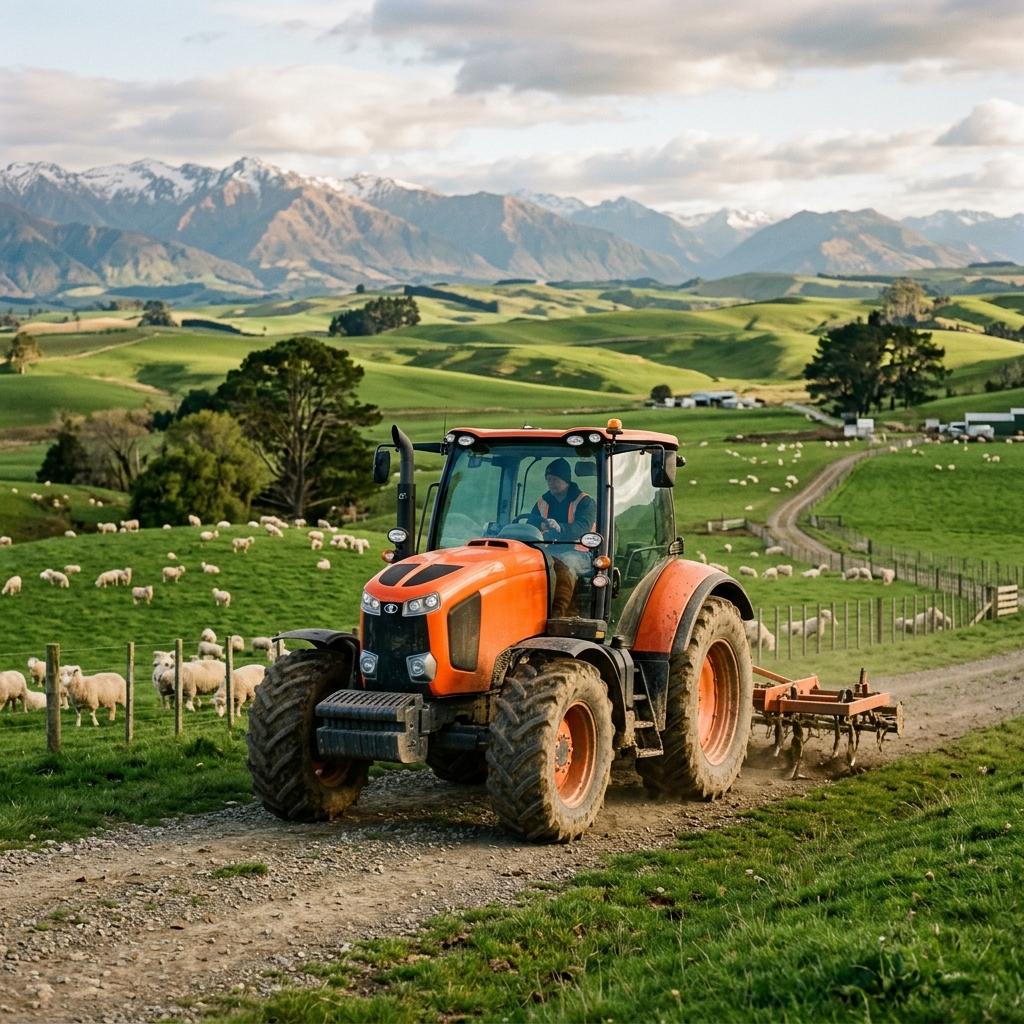
What You Need to Know About Tractor Insurance in NZ
Tractors are among the most valuable and hardest-working machines on New Zealand farms, lifestyle blocks, orchards, and contracting operations. But not all tractor insurance policies are built the same way.
Key points:
- Farm-owned tractors typically sit under rural or farm machinery policies, while contractor-owned tractors often need commercial plant or motor cover
- Road use changes your insurance requirements, a tractor moving between jobs on public roads needs different cover than one that never leaves the property
- Some policies include extensions for foreign object ingestion into agricultural implements, which is a real risk for tractors running PTO-driven equipment
- Agreed value vs. market value settlement is a critical decision that affects what you receive at claim time
- Financed tractors have specific insurance requirements set by the lender
- Working with a broker means someone compares the market for you and advocates on your behalf if a claim gets complicated
This is general information only. For advice tailored to your situation, get in touch with our team.

How this could protect you
Cover matched to how you actually use your tractor, farm, contracting, or road use
Genuine market comparison across up to 20 insurers, not a single-option quote
Advice on agreed value vs. market value so you know what you'll receive at claim time
Broker advocacy at claim time, we fight for your payout, not the insurer's position
Annual policy review to catch gaps, outdated sums insured, and unnecessary costs
Financed machinery requirements handled correctly so your lender obligations are met
Years of experience
Clients protected
5-star reviews
What's covered
What Tractor Insurance Typically Covers
Most tractor policies are built around accidental physical loss or damage, rollover, collision, fire, theft, flood, and damage during operation. Beyond that core, the detail varies significantly between insurers and policy types.
Common extensions to look for:
- Foreign object ingestion: some agricultural motor wordings include cover for damage caused by a foreign object entering an agricultural implement or machine, which is a real risk for tractors running PTO-driven equipment
- Loss of profit: available on some policies for contracting tractors that earn income, covering lost revenue while the machine is being repaired after a covered loss
- Salvage and recovery: reasonable costs to recover a machine after an incident, including extraction from difficult terrain
- Keys and locks: replacement costs if tractor keys are lost or stolen
Note that mechanical or electrical breakdown is typically excluded from standard tractor policies. Machinery breakdown cover is a separate policy type that fills this gap. Implements and attachments are also generally not covered under the tractor policy itself, they need to be listed separately.
This is general information only. Policy terms vary between insurers, talk to your broker about what applies to your specific situation.
Why you need this
Why Getting Tractor Insurance Right Matters
A tractor isn't just a vehicle. For most farmers, lifestyle block owners, and contractors, it's one of the most valuable and operationally critical assets they own. If it's off the road, whether from an accident, a theft, or a weather event, the impact goes well beyond the repair bill.
The problem with tractor insurance in New Zealand is that it doesn't sit neatly in one policy category. Farm tractors, contractor tractors, and machines that use public roads all have different cover requirements. A policy that works perfectly for a farm-owned tractor that never leaves the property may leave a contracting tractor with significant gaps.
Road use is a common trigger for coverage issues. The moment a tractor travels on a public road, different policy requirements apply, and not all rural or plant policies automatically extend to cover that use.
Then there's the question of what happens at claim time. Insurers and policyholders don't always agree on value, cause of loss, or whether a particular use was covered. Having a broker in your corner, someone who works for you, not the insurer, makes a real difference when a claim gets complicated.
Every farming and contracting operation is different. Your cover needs to reflect your specific situation.
How We Sort Your Tractor Insurance
Four straightforward steps from first conversation to confirmed cover, no runaround, no jargon.
Tell Us About Your Machine and How You Use It
Farm use, contracting, road travel, financed or owned outright, we ask the right questions upfront so nothing gets missed.
We Compare the Market
We go to up to 20 insurers and find the policies that actually fit your situation, not just the first option that comes back.
We Explain Your Options Clearly
No jargon, no pressure. We'll walk you through what each option covers, what it doesn't, and what we'd recommend and why.
Cover Confirmed, Policy Reviewed Annually
Once you're covered, we don't disappear. We review your policy at renewal to make sure it still fits as your operation changes.
Pricing factors
What Affects the Premium on Tractor Insurance
Several factors influence what you'll pay for tractor insurance in New Zealand. Understanding them helps you make informed decisions, and avoid paying for cover you don't need or underinsuring what you do.
- Machine value and sum insured: Higher-value tractors cost more to insure. Agreed value policies typically carry a higher premium than market value policies, but they provide more certainty at claim time.
- How the tractor is used: Farm use, contracting work, and road use all carry different risk profiles. Contracting use, particularly work done on other people's properties, generally attracts higher premiums than on-farm use only.
- Age and condition of the machine: Older tractors may be harder to insure on agreed value terms. The machine's maintenance history and condition can affect both the premium and the terms available.
- Location and operating environment: Tractors operating in high-risk terrain, flood-prone areas, or regions with elevated theft rates may attract higher premiums.
- Claims history: A history of claims, particularly frequent or high-value ones, will typically increase your premium at renewal.
- Extensions selected: Adding loss of profit cover, foreign object ingestion extensions, or breakdown cover will affect the overall premium. A broker can help you weigh up which extensions are worth the additional cost for your situation.
This is general information only. Premiums vary between insurers, get in touch for a quote based on your specific circumstances.
Local brokers, New Zealand-wide
From our Christchurch head office to our teams in Auckland East, Bay of Plenty and Manawatu, Gerrards brokers arrange cover for businesses across New Zealand. Find the team closest to you.
Related FAQs
The answers that matter when you're deciding on coverage.
Usually not. Implements like ploughs, mowers, balers, and sprayers are separate assets and typically need to be specifically listed or covered under a broader farm machinery policy. Assuming they're included under your tractor policy is one of the more common gaps we see. Check what's actually listed on your schedule, and if your implements aren't there, talk to your broker about getting them added.
Quite possibly. If your sum insured hasn't moved since you set it, and replacement costs have risen, there's a real chance you'd face a shortfall at claim time. Most policies don't automatically adjust for market movements. It's worth getting a current replacement cost estimate and reviewing your sum insured at each renewal, not just leaving it on autopilot.
Yes, it does. Any movement on a public road, even a short crossing between paddocks, is road use for insurance purposes. Your policy needs to reflect that. Some policies cover limited road travel as part of normal agricultural operation, but others require it to be specifically noted. Tell your broker about any road use, even if it seems minor, so the right cover is in place.
Agricultural contracting use is treated differently from farming your own land, and not all rural motor policies extend to it automatically. Some commercial motor wordings include a specific extension for agricultural and horticultural contracting, and some go further with loss of profit cover if the machine is off the road during the season. Make sure your policy wording actually reflects the work you do, not just 'agricultural use' in general.
Some rural motor policies include a specific extension for foreign object ingestion into agricultural implements or machines, but it's not automatic across all wordings. Many policies that do include it apply an additional excess to those claims. Check your policy schedule and wording carefully, and if you're not sure, ask your broker before you need to find out the hard way.
What our clients are saying
Businesses and families trust us with what matters
Why Tractor Insurance in NZ Is More Complicated Than It Looks
Most tractor owners assume they're covered. They've got some kind of rural or vehicle policy, the machine is listed somewhere, and that's good enough.
It usually isn't.
Tractor insurance in New Zealand sits at the intersection of several different policy types, rural machinery, commercial motor, plant and equipment, and sometimes all three at once. Which one applies to you depends on how your tractor is used, who owns it, where it operates, and whether it ever touches a public road. Get that wrong, and you could find yourself holding a claim that falls between the gaps.
At Gerrards, we come across this. A lifestyle block owner with a compact tractor thinks they're covered under their house and contents policy. A contractor running a fleet of tractors for silage work assumes their commercial motor policy handles everything. A farmer with a financed machine doesn't realise the lender's requirements affect what cover they need. These aren't unusual.
So let's talk about how tractor insurance actually works in New Zealand, and what to check before you need to make a claim.
Farm Tractors vs. Contractor Tractors: The Cover Is Different
This is the first question any broker will ask you: is this tractor part of a farming operation, or is it used for contracting work?
The answer changes everything.
Farm-Owned Tractors
If you're a farmer or lifestyle block owner and the tractor stays on your property doing your own work, it typically sits under a rural or farm machinery and equipment insurance policy. These wordings are designed around agricultural use, they understand that tractors operate in rough conditions, run PTO-driven implements, and occasionally ingest things they shouldn't.
Rural policies often include extensions that standard commercial motor policies don't. One worth knowing about: some rural motor wordings include cover for accidental loss caused by foreign object ingestion into agricultural implements or machines. If a rock gets pulled into a baler, a mower, or a PTO-driven attachment and causes damage, that extension can be the difference between a covered claim and an out-of-pocket repair bill. Not every policy includes it automatically, check whether yours does.
Contractor-Owned Tractors
If you're running tractors as part of a contracting business, doing silage, cultivation, spraying, or harvesting for other people, the picture changes. You're using the machine commercially, often on multiple properties, and the income it generates is part of your business. That typically means commercial plant or commercial motor cover, not a standard rural policy.
Some commercial motor wordings include specific extensions for agricultural and horticultural contracting use, and some even include loss of profit cover if your tractor is off the road due to a covered loss and you're losing contracting income as a result. That's genuinely useful cover for anyone whose livelihood depends on keeping machines running through the season.
The key is making sure your policy wording actually covers the work you do. "Agricultural use" and "agricultural contracting" aren't always treated the same way.
Road Use Changes Your Insurance Requirements
Here's something a lot of tractor owners don't think about until it's too late.
The moment your tractor moves onto a public road, even just travelling between paddocks or heading down the road to a neighbouring property, your insurance requirements change. In New Zealand, vehicles used on public roads need to meet specific requirements, and your policy needs to reflect that use.
For tractors that regularly travel on public roads, mobile plant and road cover is worth understanding. It's designed for machines that operate both on private land and on public roads, and it handles the liability and damage cover in both environments.
If your tractor only ever operates on private land, you may have more flexibility. But if there's any road use at all, even occasional, tell your broker. It affects which policy applies and whether a claim would be covered.
Agreed Value vs. Market Value: A Decision That Matters
When you insure a tractor, one of the most important decisions you'll make is how the machine is valued, and most people don't give it enough thought.
Market value means the insurer pays out what the tractor was worth at the time of the loss. For an older machine that's depreciated significantly, that number might be a lot less than what it would cost you to replace it with something comparable.
Agreed value means you and the insurer agree on a set sum insured upfront. If the tractor is a total loss, that's what you get, no argument about depreciation, no negotiation about market conditions.
For working tractors that are genuinely critical to your operation, agreed value machinery insurance is worth considering seriously. The premium is typically higher, but you know exactly where you stand at claim time.
For older or lower-value machines, market value cover might be perfectly adequate. It depends on the machine and what it would cost to replace it.
Financed Tractors Have Extra Requirements
If your tractor is on finance, whether that's through a bank, a rural lender, or a dealer finance arrangement, your lender almost certainly has insurance requirements written into the loan agreement.
Typically, they'll require the machine to be insured for its full replacement or agreed value, with the lender noted as an interested party on the policy. If the tractor is written off and the insurance payout doesn't cover the outstanding finance balance, you're still on the hook for the difference.
This is where insuring financed machinery gets important. A broker can check that your policy meets the lender's requirements and that the sum insured reflects the machine's actual value. Keep in mind that insurance pays out based on the machine's value, not your loan balance, so if you owe more than it's worth, you could still have a shortfall.
What Tractor Insurance Typically Covers
While every policy is different and you should always read your own wording carefully, most tractor insurance policies in New Zealand are built around accidental physical loss or damage to the machine. That includes things like:
- Rollover or collision damage
- Fire and theft
- Flood and weather events
- Accidental damage during operation
Beyond the core cover, there are extensions that vary significantly between policies and insurers. Some of the ones worth asking about:
Foreign object ingestion: Some agricultural motor wordings include cover for damage caused by a foreign object being ingested into an agricultural implement or machine. Given how often tractors run PTO-driven equipment through rough ground, this is a real exposure. Check whether your policy includes it, and whether an additional excess applies.
Loss of profit / loss of income: If your tractor earns income, either as part of a contracting business or as a key piece of your farming operation, some policies offer cover for lost income while the machine is being repaired after a covered loss. The conditions vary, so read the detail.
Salvage and recovery: Getting a tractor out of a boggy paddock or off a hillside after an incident can be expensive on its own. Many policies include cover for reasonable salvage and recovery costs.
Keys and locks: If your tractor keys are lost or stolen, some policies cover the cost of replacing locks and keys. A small thing, but useful.
Tractors and Implements: Don't Confuse the Two
Your tractor is one asset. The implements you run behind it, ploughs, mowers, balers, sprayers, cultivators, are separate assets that need their own cover.
This catches people out regularly. They insure the tractor and assume the implements are covered too. They're usually not, unless they're specifically listed or included under a broader farm machinery or plant policy.
For a full picture of how implements and attachments fit into your insurance programme, farm machinery and equipment insurance covers the broader rural context. For specialist harvesting equipment, harvester insurance is worth a separate look, harvesters have their own risk profile and policy considerations.
Machinery Breakdown: A Gap Most People Miss
Standard tractor insurance covers accidental physical damage. It doesn't cover mechanical or electrical breakdown.
If your tractor's engine fails, a gearbox gives out, or a hydraulic system breaks down due to wear or internal failure, that's typically excluded from a standard motor or plant policy. It's not an accident, it's a breakdown.
Machinery breakdown insurance is a separate policy type that fills this gap. For high-value tractors or machines that are critical to your operation, it's worth considering alongside your standard cover. The two policies work together, one covers the accident, the other covers the mechanical failure.
A Practical Checklist: What to Review on Your Tractor Policy
Before your next renewal, go through these questions. If you can't answer them confidently, talk to your broker.
- Is the tractor listed correctly? Make, model, year, and any modifications should all be accurate.
- Is the sum insured right? Does it reflect current replacement cost, or has it drifted out of date?
- Agreed value or market value? Do you know which applies, and is it the right choice for this machine?
- Does the policy cover the work you actually do? Farm use, contracting, road travel, all of these need to be reflected.
- Are implements covered separately? Don't assume they're included.
- Is foreign object ingestion covered? If you run PTO-driven implements, check this specifically.
- Is a lender noted on the policy? If the machine is financed, this is usually a requirement.
- Do you have breakdown cover? If not, is that a gap you're comfortable with?
- When did you last review this policy? If it's been more than 12 months, it's worth a fresh look.
How Gerrards Approaches Tractor Insurance
We're not tied to any single insurer. We work with up to 20 insurance companies, which means when you ask us to find tractor cover, we're actually comparing the market, not just presenting you with one option and hoping it fits.
More importantly, we give you advice. Not just quotes. We'll ask the right questions about how you use the machine, what it's worth, whether it's financed, and what your biggest exposures are. Then we'll find the policy that actually fits those answers.
And if you ever need to make a claim, we're on your side. Not the insurer's. That matters more than most people realise until they're in the middle of a disputed claim wondering why no one is returning their calls.
For specialist machinery beyond tractors, from headers to excavators, our broader machinery insurance capability covers the full range of plant and equipment.
Every business and farming operation is different. Your policy needs will depend on your specific circumstances. This is general information only, for advice tailored to your situation, get in touch with our team.
Secure the exact cover your business needs
We'll compare up to 20 insurers and help make sure your policy fits how you use your machine, farm, lifestyle block, or contracting operation.