Underground Work & Underground Services Damage
Underground services damage insurance protects plant operators and contractors when digging work strikes buried cables, pipes, or other infrastructure. This page explains how plant and liability policies handle underground risks, and where the gaps usually hide.
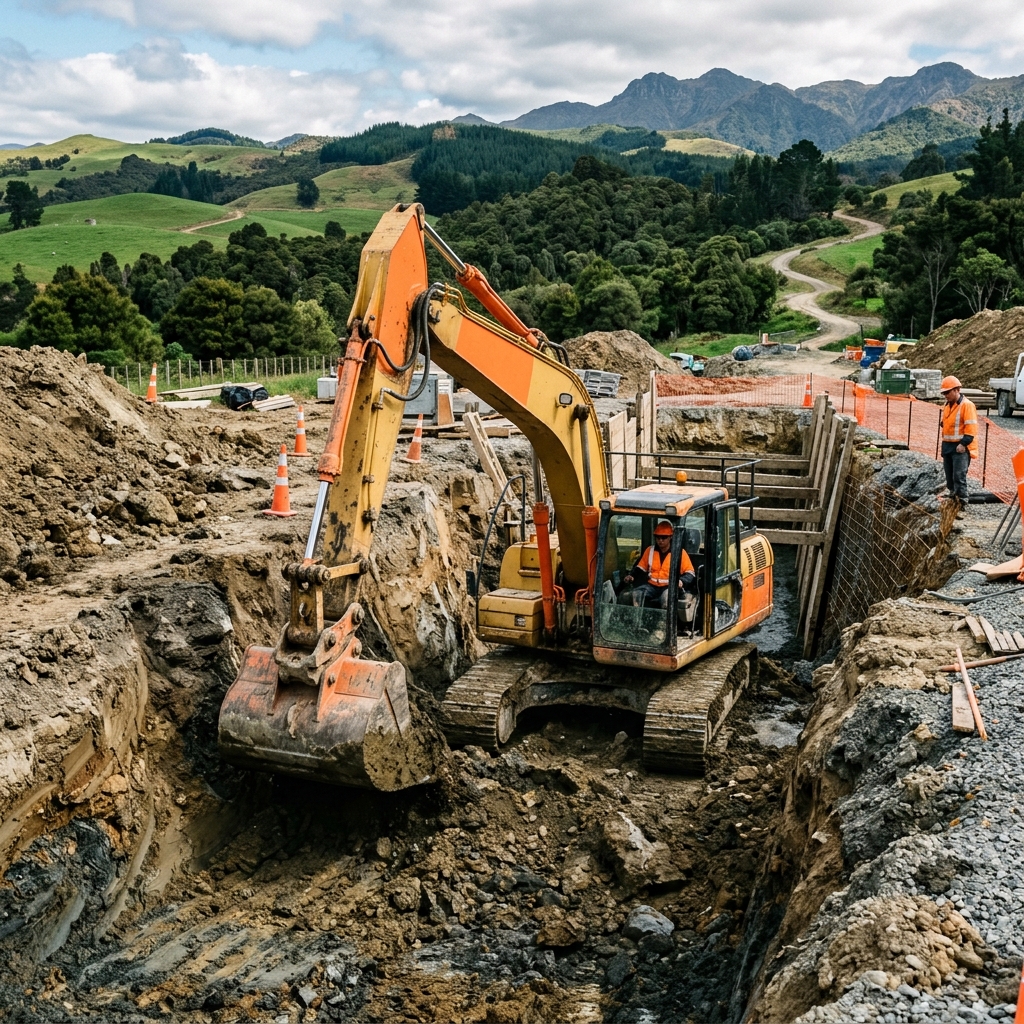
What You Need to Know About Underground Services Damage Insurance
Underground services damage insurance sits at the intersection of two separate policy types: your plant insurance and your public liability insurance. Both can contain exclusions that catch operators off guard.
- Plant policies may exclude the machine and its attachments while they are physically underground, meaning a stuck or damaged bucket isn't automatically covered.
- Liability policies often exclude damage to underground cables, pipes, and infrastructure unless specific steps were taken before digging started, typically locating services through a recognised process like beforeUdig.
- Even where liability cover exists for underground services, a higher excess may apply compared to standard claims.
- Completing a beforeUdig enquiry before breaking ground isn't just good practice, it's often a condition of your liability cover applying at all.
- Every business is different. Talk to a broker to confirm what your specific policies actually cover.

How this could protect you
Expert review of both plant and liability policies for underground work gaps
Access to up to 20 insurers so we find wordings that suit how you actually dig
Clear advice on beforeUdig obligations that satisfy your policy conditions
Broker advocacy at claim time, we argue your case, not the insurer's
Annual policy reviews to catch coverage drift before it becomes a problem
A same-day response with plain-language explanations of what's covered and what's not
Years of experience
Clients protected
5-star reviews
What's covered
What Underground Services Damage Insurance Covers
Underground services damage insurance isn't a single standalone policy, it's a combination of cover across your plant insurance and your public liability policy, each handling a different part of the risk.
Under plant insurance, the key question is whether your machine and its attachments are covered while physically underground. Some wordings exclude this. If your work involves the machine going below grade, you need to confirm your plant policy doesn't contain this exclusion, or that you've arranged cover that addresses it.
Under liability insurance, cover for damage to existing underground cables, pipes, and infrastructure is typically excluded by default. Many policies reinstate this cover provided specific pre-work steps were taken: locating services through a recognised enquiry process, sighting plans, and taking reasonable precautions on site. Even where reinstated, a higher excess may apply to these claims.
The practical upshot: both covers need to be reviewed together, and your operational practices need to align with what your policies actually require.
Why you need this
Why Underground Services Damage Insurance Matters
Striking a buried cable or pipe isn't just a safety incident, it's a financial one. Repair costs for damaged underground infrastructure can be significant, and claims for related losses can add to the liability exposure quickly.
Without the right cover in place, those costs land on you. And the standard exclusions in both plant and liability policies mean that 'having insurance' isn't the same as 'being covered for this'.
For any contractor doing excavation work in New Zealand, underground services damage is one of the most foreseeable risks on the job. It deserves specific attention in your insurance programme, not an assumption that your existing policies handle it.
Talk to your broker about whether your current cover applies to underground work, and what conditions your policies attach to that cover.
How We Sort Out Your Underground Cover
Four straightforward steps from first conversation to policies that actually fit your work.
Tell Us How You Work
We start by understanding your operations, what machines you run, what jobs you take on, and how often your work involves underground risk. The more we know, the better we can match your cover.
We Review What You've Got
We check your existing plant and liability policies for underground exclusions, reinstatement conditions, and excess structures. We'll tell you plainly what we find.
We Compare the Market
With access to up to 20 insurers, we identify the wordings that best suit your specific operations, not just the cheapest premium, but the cover that actually applies when something goes wrong underground.
You Get Clear Recommendations
We explain what we've found and what we recommend in plain language. No jargon, no pressure. You make the call with full information, and we're here when you need us.
Pricing factors
What Affects the Premium for Underground Work Cover
Several factors influence what you'll pay for plant and liability insurance that properly covers underground operations:
- Type of work and frequency of underground exposure: contractors who regularly trench or drill underground represent a higher risk profile than operators who occasionally dig. Insurers assess how often the machine goes below grade.
- Machine type and sum insured: larger, more valuable machines cost more to insure under plant policies. The sum insured needs to reflect actual replacement value, not a figure chosen to keep the premium down.
- Claims history: a history of underground services strikes or liability claims will affect your premium and may influence which insurers are willing to offer cover.
- Operational practices: insurers look at whether beforeUdig enquiries are standard practice, whether operators are trained, and whether reasonable precautions are documented. Better practices can support better terms.
- Geographic area of operations: urban environments typically have denser underground infrastructure than rural areas, which affects the likelihood of a services strike.
- Policy structure and excess selection: the excess you choose on both plant and liability policies affects the premium. A higher excess on underground services claims (where that's a separate excess) reduces the premium but increases your out-of-pocket exposure on a claim.
Local brokers, New Zealand-wide
From our Christchurch head office to our teams in Auckland East, Bay of Plenty and Manawatu, Gerrards brokers arrange cover for businesses across New Zealand. Find the team closest to you.
Related FAQs
The answers that matter when you're deciding on coverage.
No. The underground exclusions in plant policies and liability policies are separate and independent. Your plant policy covers your own machine; your liability policy covers damage you cause to someone else's property. A gap in one doesn't affect the other, and closing one doesn't close the other. You need both covers reviewed together, which is exactly why we look at them as a package rather than two unrelated policies.
Residential properties have buried power, gas, telecommunications, and water connections, and a standard domestic dig can easily strike one of them. The liability exposure is the same whether you're a civil contractor or a landscaper. Many operators in smaller-scale earthmoving work assume their exposure is low until they're looking at a repair bill for a damaged service. Check whether your liability policy reinstates underground services cover and what conditions it attaches.
Some plant policy wordings do exclude the machine and its attachments while they're underground, not just while working near underground services. If your bucket was below ground level when the damage occurred, that exclusion may apply depending on how your policy defines it. This is one of the first things we check when reviewing plant policies for operators doing trench work, because it catches people out more often than it should.
Running a beforeUdig enquiry is one of the key steps many liability policies require before underground services cover applies. If you made the enquiry, sighted the plans, and took reasonable precautions on site, you're in a much stronger position than if you hadn't. Whether a claim is accepted still depends on your specific policy wording and the full circumstances, but having that documentation gives your broker something concrete to work with when the claim is lodged.
Not necessarily. Many broadform liability policies exclude underground services damage by default but offer to reinstate that cover if specific conditions were met before work started. Whether your policy includes that reinstatement, and what conditions apply, depends on your specific wording. Talk to your broker about what your policy actually says before your next dig job, not after something goes wrong.
What our clients are saying
Businesses and families trust us with what matters
The Two Traps Nobody Warns You About Before You Dig
Most plant operators think about underground risk in one way: hit a cable, make a claim. Simple enough. But the insurance picture is more complicated than that, and the complications tend to surface at the worst possible time.
There are actually two separate insurance problems when it comes to underground work. One sits in your plant policy. The other sits in your liability policy. They're different covers, different insurers in many cases, and they each carry their own exclusions. Miss either one and you're exposed.
This is what underground services damage insurance is really about, understanding both gaps, making sure they're closed, and knowing exactly what conditions your policies attach to underground work before you break ground.
Trap One: Your Plant Policy and the Underground Exclusion
What the exclusion actually says
Some plant insurance wordings exclude the machine, and its attachments, while they are underground. Not while they're working near underground services. While the machine itself is below ground level.
For most operators running excavators, diggers, or directional drills, this matters. If your bucket is down in a trench and something goes wrong, the arm gets stuck, the attachment is damaged, the machine is pulled into an unstable excavation, you may find that your plant insurer considers the loss to have occurred while the machine was underground. That can trigger the exclusion.
It sounds technical. It is. But the practical consequence is real: a damaged or written-off machine, and a claim that gets declined on a technicality most operators didn't know existed.
Why this catches people out
Plant insurance is often purchased quickly, online, through a dealer, or as part of a finance package. The policy schedule looks fine. The premium seems reasonable. Nobody reads the full wording until there's a problem.
The underground exclusion isn't buried in fine print for deceptive reasons, it reflects genuine underwriting risk. Machines operating underground face different hazards than machines working on the surface. Insurers price and scope their cover accordingly. But if you're not aware the exclusion exists, you can't manage around it.
At Gerrards, we check for this specifically when reviewing plant policies. It's one of the first things we look at for any operator doing trench work, pipe laying, or any job where the machine goes below grade. If your current policy has this exclusion and your work regularly puts the machine underground, that's a conversation worth having before your next job.
For more on how plant policies work and what to watch for, see our guides on excavator insurance and digger insurance.
Trap Two: Liability Cover and Underground Services
The standard exclusion
Many broadform liability policies contain an exclusion for damage to underground services. The default position under many wordings in the New Zealand market is that there is no cover for liability arising from property damage to existing underground cables, pipes, or other buried infrastructure.
That's a significant exclusion for any contractor who digs.
How cover can be reinstated
Here's where it gets more nuanced. Many liability policies offer to reinstate cover for underground services damage, but only if certain conditions are met before work starts. The conditions vary by insurer and wording, but they typically require that the insured took genuine steps to locate underground services prior to commencing work. That usually means:
- Making enquiries with the relevant authorities or asset owners to verify what's buried in the area
- Sighting a plan showing the location of underground infrastructure
- Using a competent third party to confirm locations on the ground
- Taking all reasonable precautions to prevent damage once locations are known
If those steps weren't taken, the exclusion stands, even if the reinstatement clause exists in your policy. The cover is conditional. And even where the conditions are met, some policies apply a higher excess to underground services claims than to standard liability claims.
This is why beforeUdig matters as both a practical discipline and an insurance discipline. It's not just about being a responsible contractor. It's about satisfying the conditions your liability policy attaches to this specific type of cover.
What 'reasonable precautions' actually means
Policies that reinstate underground services cover typically require the insured to have taken all reasonable precautions to prevent property damage, even after services are located. That means marking locations on site, briefing your operators, adjusting dig methods near confirmed service routes, and using hand digging or vacuum excavation in sensitive areas.
Documenting that process matters. If a claim is made, your insurer will want to understand what steps were taken. A beforeUdig reference number, a site plan, a pre-dig briefing record, these aren't bureaucratic box-ticking. They're the evidence that the conditions of your cover were met.
BeforeUdig: The Practical and Insurance Case
BeforeUdig is New Zealand's free utility location service. Before any excavation work, contractors can submit a request and receive information about what underground infrastructure exists in the area, power, gas, telecommunications, water, wastewater. Asset owners respond with plans and information.
From a practical standpoint, it reduces the risk of striking a live cable or pressurised pipe. From an insurance standpoint, it's often the clearest evidence that the pre-work enquiry condition in your liability policy was satisfied.
Not every insurer requires a beforeUdig enquiry specifically, the wording usually describes the outcome (verified locations, sighted plans, competent third party confirmation) rather than naming a particular service. But beforeUdig is the most straightforward way to satisfy those conditions in the New Zealand context, and most experienced contractors treat it as standard practice.
If your team isn't running beforeUdig enquiries on every dig job, that's worth reviewing, both as a safety matter and as an insurance compliance matter.
How Plant and Liability Cover Work Together
It's worth stepping back to understand how these two covers interact, because they're solving different problems.
Plant insurance covers your own machine. If your excavator is damaged while underground, that's a plant claim.
Liability insurance covers damage you cause to someone else's property. If your excavator strikes a buried power cable owned by a lines company, the cost of repairing that cable, and any consequential losses, is a liability claim.
You need both covers to be properly structured. A gap in either one leaves you exposed. And the underground exclusions in each type of policy are independent, fixing one doesn't fix the other.
For operators running tracked machines on civil and infrastructure projects, this combination of covers is particularly important. See our pages on machinery insurance and roading plant insurance for more context on how plant cover typically works across different machine types.
What to Check in Your Current Policies
If you're doing any underground work, trenching, pipe laying, cable installation, directional drilling, or general excavation, here's a practical checklist for reviewing your insurance position:
Plant policy checks:
- Does your policy contain an exclusion for the machine or its attachments while underground?
- If yes, does your work regularly put the machine below ground level?
- Have you discussed this with your broker and confirmed whether the exclusion is a problem for your specific operations?
Liability policy checks:
- Does your policy contain an exclusion for damage to underground services?
- Does your policy offer to reinstate that cover, and if so, what conditions apply?
- Is there a higher excess for underground services claims compared to standard claims?
- Does your policy cover plant attachments used during underground work under the liability section?
Operational checks:
- Are you running beforeUdig enquiries before every dig job?
- Are you documenting the enquiry, the plans received, and the precautions taken on site?
- Are your operators briefed on confirmed service locations before work starts?
- Are you using appropriate dig methods near confirmed service routes?
If you can't answer yes to all of the above, there's work to do, either operationally, or in terms of how your insurance is structured.
Who Needs to Think About This
The obvious answer is anyone who digs. But it's worth being specific, because the risk profile varies.
Civil contractors doing road construction, drainage, or subdivision work are frequently working in areas with existing buried infrastructure. The risk of striking services is real and regular.
Utility contractors installing new cables, pipes, or conduits are often working in corridors already occupied by other services. Even careful operators can encounter unmarked or incorrectly mapped infrastructure.
Landscapers and small earthmoving operators often assume their exposure is low. But residential properties have buried power, gas, telecommunications, and water connections, and a domestic dig can easily strike a service.
Hire operators providing machines and operators to other contractors need to understand whether their liability cover extends to underground services damage on third-party sites.
For contractors working on roading and infrastructure projects, the combination of plant, liability, and roading plant insurance needs to be reviewed as a package, not as separate policies purchased independently.
What Gerrards Does Differently
Most operators buy plant insurance and liability insurance separately, often from different sources, without anyone checking how the two policies interact. That's where gaps appear.
When we review a contractor's insurance programme, we look at both covers together. We check for the underground exclusion in the plant wording. We check whether the liability policy reinstates underground services cover, and what conditions apply. We look at the excess structure. And we make sure the operational practices, beforeUdig, documentation, site briefings, align with what the policies actually require.
We have access to up to 20 insurers across the New Zealand market. That means we can compare how different wordings handle underground work and find the combination that actually fits how you operate, not just the cheapest premium on the page.
And if something does go wrong on site, we advocate for you in the claims process. We know the policy wordings, we know the conditions, and we know how to present a claim in a way that gives it the best chance of being paid. That's a different proposition from buying direct and hoping for the best.
For public liability cover that's properly structured for contractors doing underground work, see our public liability insurance page.
Every business is different, your policy needs will depend on your specific circumstances and the type of work you do. This is general information only. For advice tailored to your situation, get in touch with our team.
Secure the exact cover your business needs
We'll review your plant and liability cover together, check for underground exclusions, and confirm your policies match how you actually operate. Same-day response, 8am-7pm, 7 days a week.